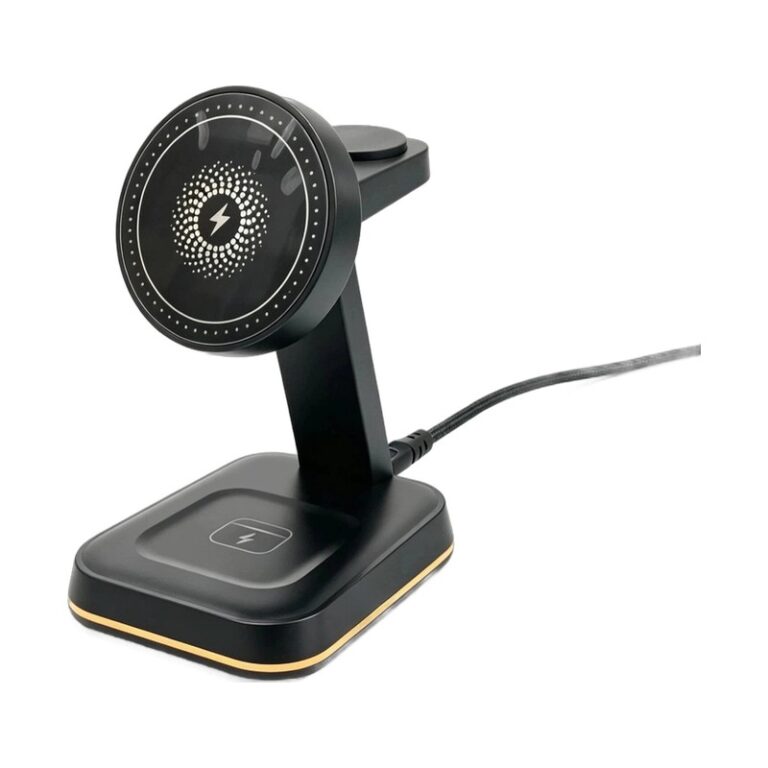
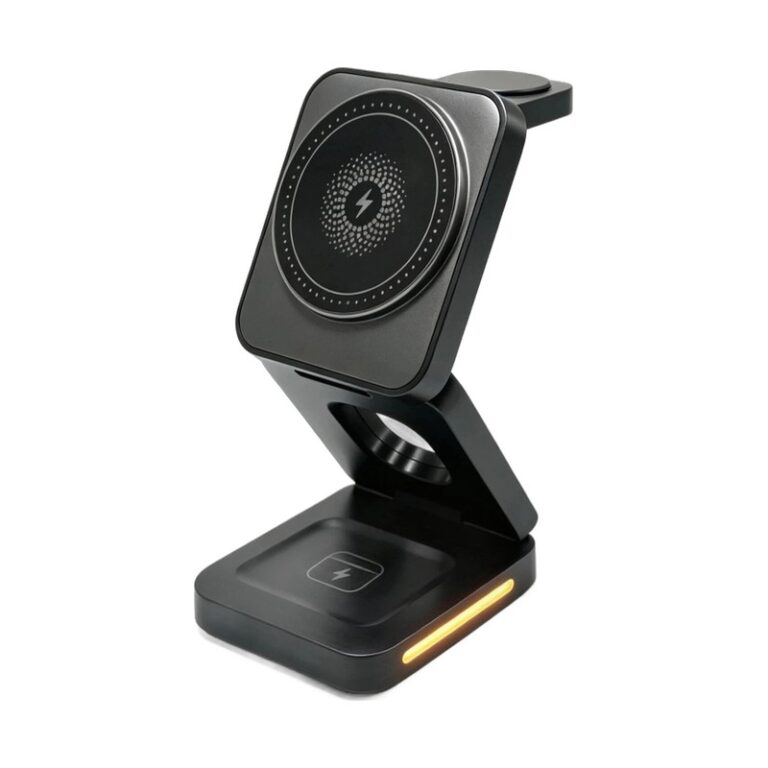
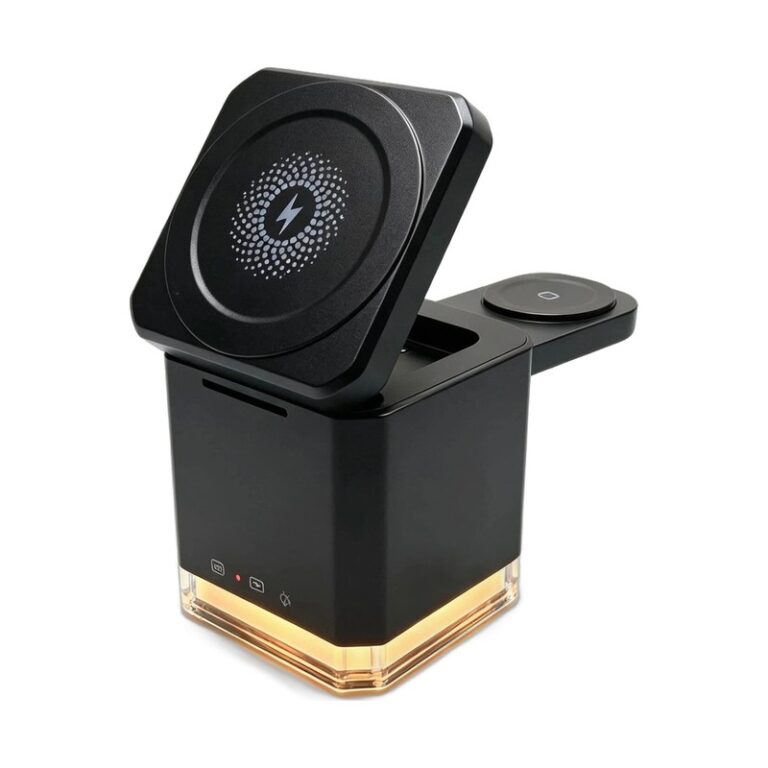
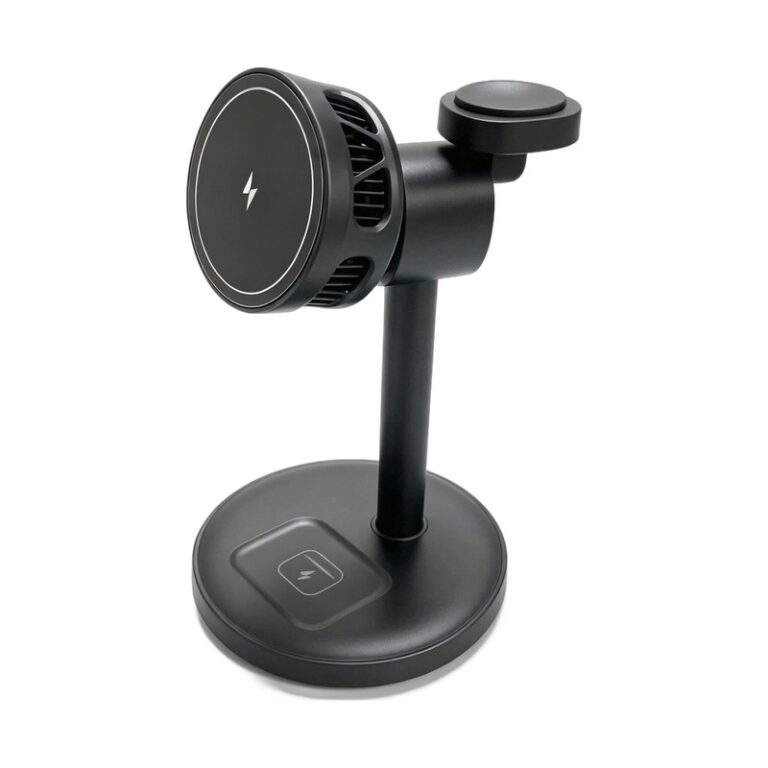
An OEM wireless charger manufacturer builds a product to the buyer’s defined specification, while an ODM partner starts from a proven platform and adapts its structure, appearance, firmware, accessories, and packaging for the target market. For most importers, brands, promotional-product companies, and distributors, the best route is not decided by terminology alone. It depends on how much product differentiation is required, how quickly the project must reach market, and which technical risks need to be controlled before mass production.
This guide explains how a professional wireless charger customization project moves from product definition to engineering samples and production approval. It also shows which requirements buyers should prepare before requesting a quotation from an OEM/ODM wireless charger supplier.
OEM vs ODM Wireless Chargers: What Is the Practical Difference?
| Project route | Best suited to | Typical customization | Main buyer responsibility |
|---|---|---|---|
| OEM | Brands with an established design or detailed specification | Housing, electronics, tooling, firmware behavior, packaging and accessories according to the approved design | Provide complete requirements, ownership information and acceptance criteria |
| ODM | Buyers who want a faster route based on an existing product platform | Logo, color, surface finish, cable, adapter, packaging and selected structural or functional changes | Select the platform and define the market, devices, price target and differentiation |
| Hybrid OEM/ODM | Brands that need speed plus visible differentiation | Existing internal platform combined with a modified enclosure, charging layout, lighting or packaging system | Prioritize changes that create customer value without unnecessary engineering risk |
An ODM project can reduce development time because the main charging architecture has already been engineered. A full OEM project offers greater product control, but it normally requires more design validation, tooling work and testing. A hybrid approach is often practical for a private-label wireless charger: keep a stable charging platform and customize the parts that customers can see, touch and understand.
What Can Be Customized on a Wireless Charger?
Wireless charger customization goes far beyond printing a logo. The useful customization scope should be defined around the target customer and sales channel.
- Product format: charging pad, magnetic stand, foldable travel charger, car charger, or multi-device charging station.
- Charging layout: phone-only, phone and earbuds, or 3-in-1 arrangements for phone, watch and TWS devices.
- Industrial design: enclosure geometry, folding mechanism, charging angle, base proportions and cable routing.
- Materials and finish: plastic texture, soft-touch treatment, decorative panels, metal accents and color matching.
- User experience: indicator-light color, brightness, button behavior, night mode and alignment guidance.
- Brand presentation: logo position, printing method, color system, retail box, insert card, manual and carton markings.
- Accessories: cable length and type, plug options, adapter specification and packaging contents.
Not every option should be changed in every project. A good OEM/ODM discussion separates cosmetic differentiation from changes that affect charging performance, heat, electromagnetic behavior or device compatibility. This helps the buyer understand which requests need only an appearance sample and which require engineering validation.
A Six-Stage Wireless Charger Customization Process
1. Define the market requirement
Start with the use case instead of starting with a catalog model. Identify the target country, sales channel, retail price range, charging scenario and device mix. For example, a compact travel charger has different priorities from a desktop 3-in-1 station or an in-car magnetic charger.
The first brief should also state whether the project needs an existing ODM platform, a visibly modified platform, or a new OEM design. This prevents quotations for products that look similar but involve very different development work.
2. Freeze the key specification
Before appearance decisions dominate the conversation, agree on the charging positions, intended output levels, input requirement, supported device types, connector, cable and adapter assumptions. Product dimensions, weight target, operating environment and packaging limits should also be recorded.
Output labels alone do not describe real charging performance. Alignment, coil selection, thermal design, power input and the receiving device all influence results. Buyers should request a test plan based on representative phones, watches, earbuds and cases sold in the target market.
3. Review design feasibility
During design-for-manufacturing review, the supplier checks whether the requested shape, wall thickness, hinge, magnets, decorative parts and internal component layout can be produced consistently. This stage should identify conflicts early—for example, a very compact enclosure may leave less space for thermal management, while a heavy decorative panel may affect a folding structure.
For a new enclosure, the parties should define who supplies the industrial design, who prepares the mechanical drawings, how tooling is approved, and how design ownership is documented. For an adapted ODM model, the change list should clearly separate standard components from buyer-specific components.
4. Build and evaluate samples
A visual sample can confirm color, finish, logo size and packaging direction. An engineering sample is needed when a change may affect fit, function, charging alignment, heat or user interaction. These are different approvals and should not be treated as one step.
Sample feedback works best when it is measurable. Instead of “the light is too bright,” specify the viewing condition and preferred behavior. Instead of “charging is slow,” record the device, case, adapter, cable, starting battery level and ambient temperature. Clear feedback shortens the revision loop.
5. Validate performance and reliability
The validation plan should match the product and intended market. Common checks include:
- charging function across the agreed phone, watch and earbud list;
- alignment tolerance with selected cases and orientations;
- temperature behavior during extended charging;
- foreign-object, overcurrent and overvoltage protection behavior;
- connector, cable and adapter compatibility;
- hinge, folding and mechanical-cycle checks for portable models;
- surface, print and packaging inspection;
- drop, vibration or transport tests when relevant to the sales channel.
Certification and compliance requirements vary by market and product configuration. The exact standard, test scope and responsible party should be confirmed for each project before the order is finalized; buyers should not assume that one report automatically covers every customized version.
6. Approve the production standard
Mass production should begin against an approved specification, sample and inspection standard. The golden sample, artwork files, packaging list, label information and critical dimensions need version control. Any material or component change after approval should be reviewed for its effect on performance and compliance.
For repeat orders, consistent documentation is as important as the first sample. It gives the factory and buyer the same reference when checking color, logo, accessories, charging behavior and packaging.
How Buyers Can Reduce OEM/ODM Project Risk
- Prioritize meaningful differentiation. Customize features that improve positioning or user experience, rather than changing components only to make the product different.
- Separate assumptions from confirmed requirements. List required items, preferred items and optional items in the RFQ.
- Use a device matrix. Name the representative phone, watch, earbud, case and adapter combinations to be tested.
- Approve both appearance and function. A good-looking sample is not automatically the functional production standard.
- Control versions. Put dates and revision numbers on specifications, drawings, artwork and sample feedback.
- Confirm commercial terms per project. MOQ, sample cost, tooling, lead time, certification, warranty and packaging depend on the selected platform and customization depth.
What Information Should Be Included in an OEM/ODM RFQ?
A useful request for quotation gives the manufacturer enough information to recommend a realistic platform and identify development work. Include:
- target product type and charging positions;
- target market and sales channel;
- required devices and output expectations;
- reference images, drawings or an existing product if available;
- required colors, finish, logo method and packaging;
- cable and adapter requirements;
- estimated order quantity and launch schedule;
- required tests, documentation and destination-market compliance;
- which elements must be exclusive and which may use a standard platform.
Shinestone can discuss OEM, ODM and hybrid wireless charging projects based on the buyer’s market, product concept and customization priorities. Explore our wireless charger range to identify a possible development platform, or review the compact foldable 3-in-1 magnetic wireless charger shown in this article.
Frequently Asked Questions
Is OEM or ODM better for a private-label wireless charger?
ODM is usually better when speed and lower development complexity are priorities. OEM is better when the buyer already owns a detailed design or needs substantial structural and functional differentiation. A hybrid approach can balance launch speed with visible brand customization.
Can a wireless charger be customized without opening new tooling?
Yes. Logo, color, surface treatment, cable, packaging and accessory changes may be possible on an existing platform. New enclosure geometry or major mechanical changes may require new tooling. The supplier should confirm feasibility after reviewing the exact change list.
What is the most important sample test?
There is no single universal test. The most useful starting point is a charging and temperature test matrix using the target devices, cases, adapters and operating conditions. Mechanical and packaging tests should then be added according to the product design and sales channel.
Does customizing the housing affect certification?
It can. Changes to materials, dimensions, coil position, electronics, cable, adapter or thermal behavior may affect the applicable test scope. Compliance should be reviewed for the final product configuration and target market.
How should a buyer compare two OEM wireless charger quotations?
Compare the full specification and responsibility split—not only unit price. Check what is included for samples, tooling, packaging, accessories, testing, documentation, quality control, revisions and after-sales support. Two quotations may describe different levels of customization even when the product images look similar.
Build a Clearer Wireless Charger Customization Brief
The strongest OEM/ODM projects begin with a clear problem to solve and an agreed validation method. When product format, device compatibility, appearance, packaging and approval criteria are defined early, the manufacturer can spend more time improving the solution and less time interpreting incomplete requirements.
If you are planning a private-label charging pad, magnetic stand, foldable travel charger or multi-device station, contact Shinestone with your target market, reference design, required devices and estimated quantity. Our team can review the brief and discuss a suitable OEM, ODM or hybrid development route. Final specifications, MOQ, lead time, certification scope and commercial terms are confirmed for each project.