iPhone Duo magnetic wireless charging is now official. Announced on September 9, 2026, iPhone Duo supports wireless fast charging with MagSafe or Qi2 chargers. Apple states that the device can reach up to 50% charge in around 30 minutes under its test conditions. Its official cases are also compatible with MagSafe, Qi2 25W and Qi-certified chargers.
For consumers, this means the familiar snap-on charging experience continues in a new form factor. For wireless charger brands, distributors and sourcing teams, the message is strategic: foldable phones do not make magnetic charging less relevant. They make mechanical fit, thermal control, alignment and real-device validation more important.

Does iPhone Duo support magnetic wireless charging?
Yes. Apple’s launch information confirms support for MagSafe and Qi2 wireless charging. Apple also says the iPhone Duo cases use built-in magnets for alignment with compatible chargers.
Magnetic alignment is more than a convenience feature. A correctly aligned phone and transmitter coil can reduce the repeated repositioning common with traditional charging pads. The Wireless Power Consortium describes Qi2’s Magnetic Power Profile as a system designed to provide magnetic attachment, improved alignment, higher efficiency and greater convenience.
iPhone Duo therefore remains relevant to several major accessory formats:
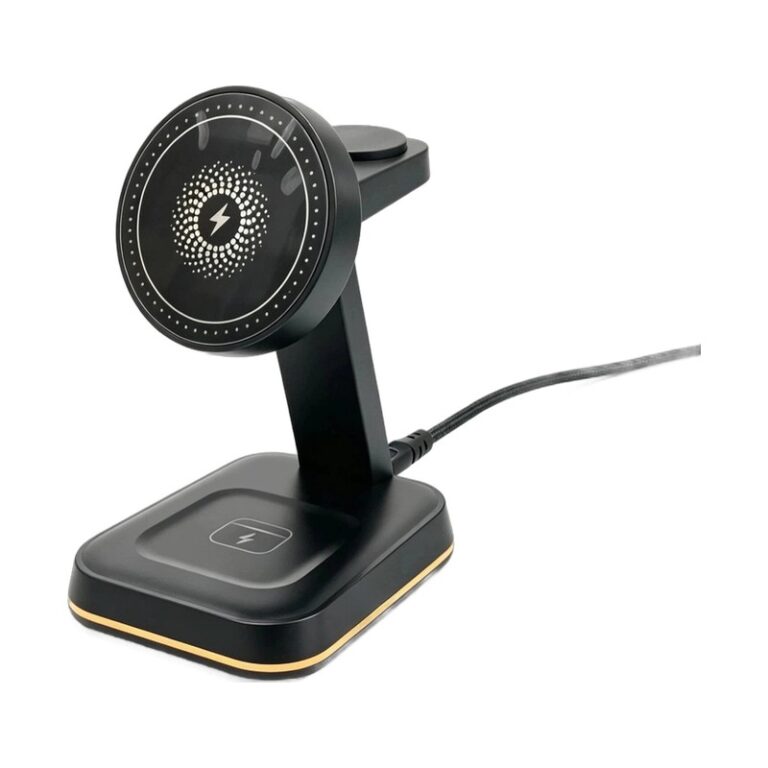
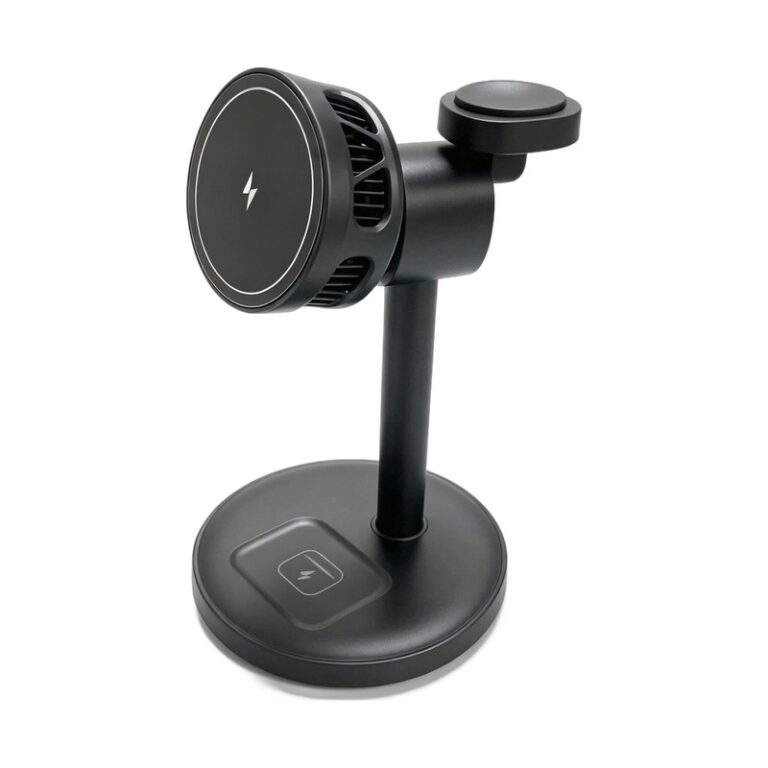
- Desktop magnetic charging stands
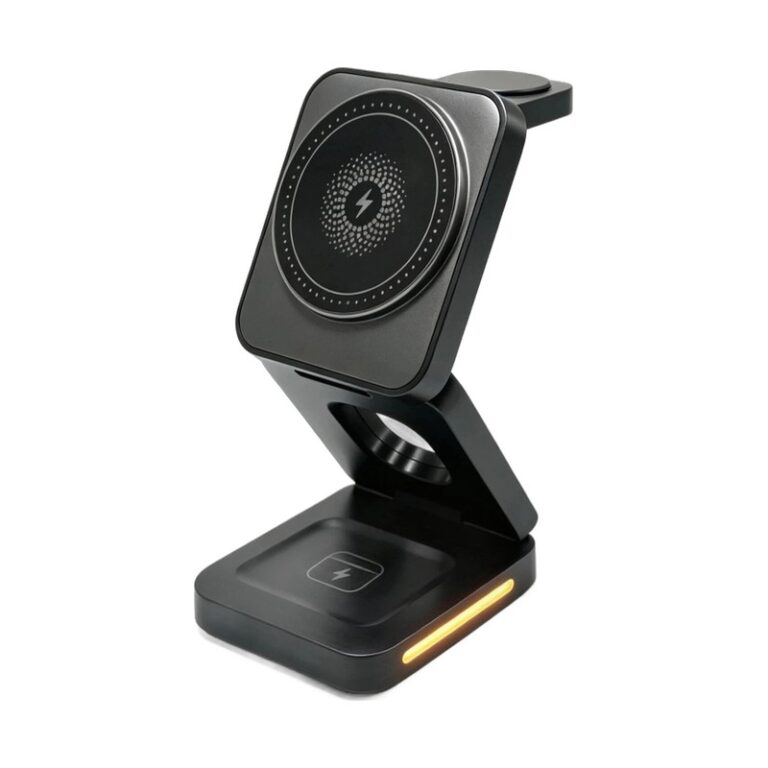
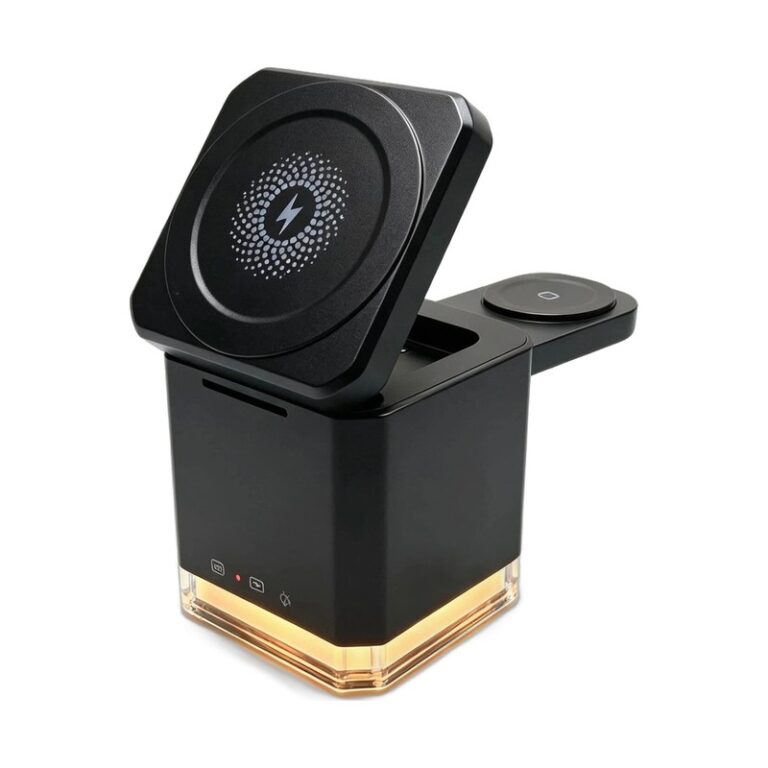
- Foldable travel chargers
- 2-in-1 and 3-in-1 charging stations
- Magnetic car chargers and mounts
- Magnetic power banks
Compatibility should never be assumed from appearance alone. Charger geometry, phone orientation, case construction, adapter output, thermal conditions and certification status can all affect the actual result.
Why a foldable iPhone changes charger design
A book-style foldable phone creates a different mechanical load from a conventional slab phone. When closed, the device is compact but relatively thick. When open, its center of gravity moves and the wider display can place more leverage on a magnetic mount.

1. Magnetic holding force must work in more than one posture
A charger that feels secure with a standard iPhone may behave differently when a foldable device is opened. Stand angle, magnet arrangement, contact surface and base weight all influence stability.
For desk and bedside products, testing should include closed, partially opened and fully opened use where the charger design permits it. For car chargers, vibration, road movement and ventilation-mount strength become even more important.
2. Coil position and mechanical clearance must be validated together
The charging coil cannot be evaluated separately from the hinge, camera area and case. A product may achieve magnetic attachment yet still interfere with the foldable body or hold the device at an inconvenient viewing angle.
- Validate charging alignment in portrait and landscape positions
- Check clearance around the hinge and camera module
- Test with the intended protective cases
- Keep buttons and USB-C connections accessible
- Confirm stability while the inner display is open

3. Thermal performance becomes a product-quality issue
Foldable phones combine large displays, compact internal packaging and complex power management. Wireless charging also produces heat, especially when alignment, ambient temperature or power delivery is not ideal.
This is why a credible product brief should look beyond headline wattage. Housing ventilation, heat-dissipation materials, firmware tuning, foreign-object detection and the power adapter all contribute to the user experience. For demanding settings such as vehicles, active cooling may also be worth evaluating.
4. A rigid one-size-fits-all stand may no longer be enough
The foldable category creates demand for adjustable charging structures. Stronger hinges, wider bases, telescopic arms and angle adjustment can help one charger serve bedside, desktop, video-call and travel scenarios.
What Qi2 means for cross-platform product planning
Qi2 helps manufacturers and brands think beyond a single phone model. The Wireless Power Consortium’s Magnetic Power Profile is based on technology contributed by Apple and creates a common magnetic-alignment framework for certified products.
For a buyer developing the next charging line, this supports a more durable product roadmap. A well-planned platform can target multiple magnetic devices and use cases while still allowing model-specific testing, case checks and regional packaging.
Certification language must be used correctly. A product should not display a Qi2 or Qi2 25W mark merely because it contains magnets or reaches a claimed power level. Logo use and compliance claims must follow WPC certification and branding requirements.
Five product opportunities after the iPhone Duo launch
Foldable 3-in-1 travel chargers
A compact charger for phone, watch and earbuds fits the same portability story as a foldable phone. The strongest concept combines small packed size, stable unfolded support and simple cable management.
Reinforced desktop charging stands
A heavier base, stronger pivot and adjustable viewing angle can support multitasking, video calls and media viewing on the larger inner display.
Magnetic car chargers with improved support
The wider open device and increased leverage make mount strength critical. Vehicle products should be evaluated for vibration, retention, air-vent stability, rotation and thermal performance.
Modular charging stations
Modular designs can separate the phone charging surface from watch and earbud modules, giving product teams more flexibility as devices and market requirements change.
Private-label accessories built around a use case
Instead of competing only on wattage, brands can differentiate through materials, color matching, folding structure, indicator-light behavior, packaging and scenarios such as travel, bedside use or automotive charging.
OEM/ODM checklist for iPhone Duo-compatible charger projects
- Define the intended device list and supported cases.
- Specify the charging standard and target power.
- Choose desktop, travel, bedside or vehicle use.
- Set closed- and open-device stability requirements.
- Define magnet, hinge and base-force targets.
- Confirm input adapter and cable specifications.
- Plan thermal, overcurrent, overvoltage and foreign-object protection.
- Define surface material, color, logo and packaging needs.
- Identify target sales regions and compliance requirements.
- Complete prototype and pre-production validation.
Frequently asked questions
Can iPhone Duo use MagSafe chargers?
Yes. Apple states that iPhone Duo supports MagSafe wireless charging. Actual speed depends on the charger, power adapter, settings, conditions and alignment.
Does iPhone Duo support Qi2?
Yes. Apple identifies Qi2 charger support and states that its iPhone Duo cases are compatible with Qi2 25W chargers.
Will every older magnetic charging stand fit iPhone Duo?
Not necessarily. Electrical compatibility does not guarantee ideal mechanical fit. Stand height, camera clearance, magnet position, base stability and the phone’s posture should be tested.
What should brands test first?
Start with magnetic alignment, open-device stability, case compatibility and thermal performance. Then validate power behavior and protection functions with the intended adapter and cable.
Can a private-label charger use the Qi2 logo?
Only when the relevant certification and WPC branding requirements are satisfied. Magnetic attachment alone does not authorize a Qi2 compliance claim.
Build the next magnetic charging product around real use
iPhone Duo shows that foldable design and magnetic wireless charging can develop together. The opportunity is not simply to reuse an old stand with a new compatibility label. It is to create products that remain stable, efficient and convenient as the phone changes shape.
ZZWSST works with B2B buyers on OEM/ODM wireless charging projects, including magnetic stands, foldable travel chargers, multi-device stations and automotive charging concepts. Contact us with your target market, product format and customization requirements to discuss the next development step.