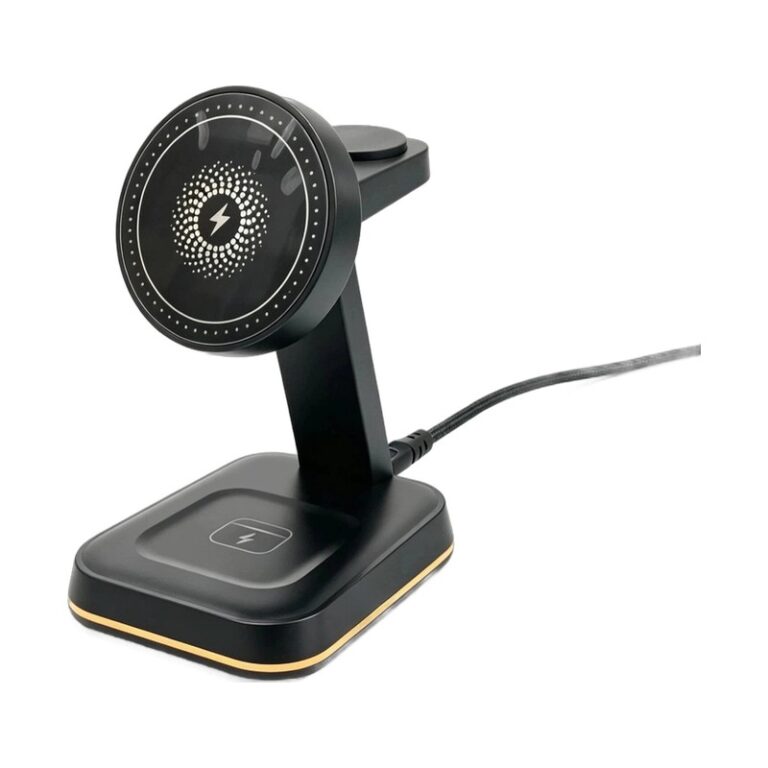
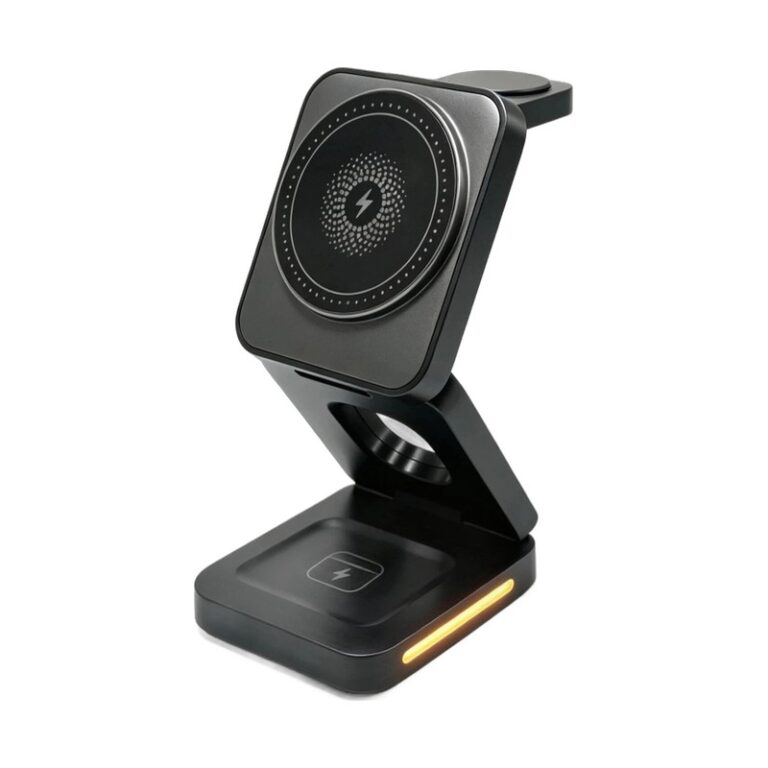
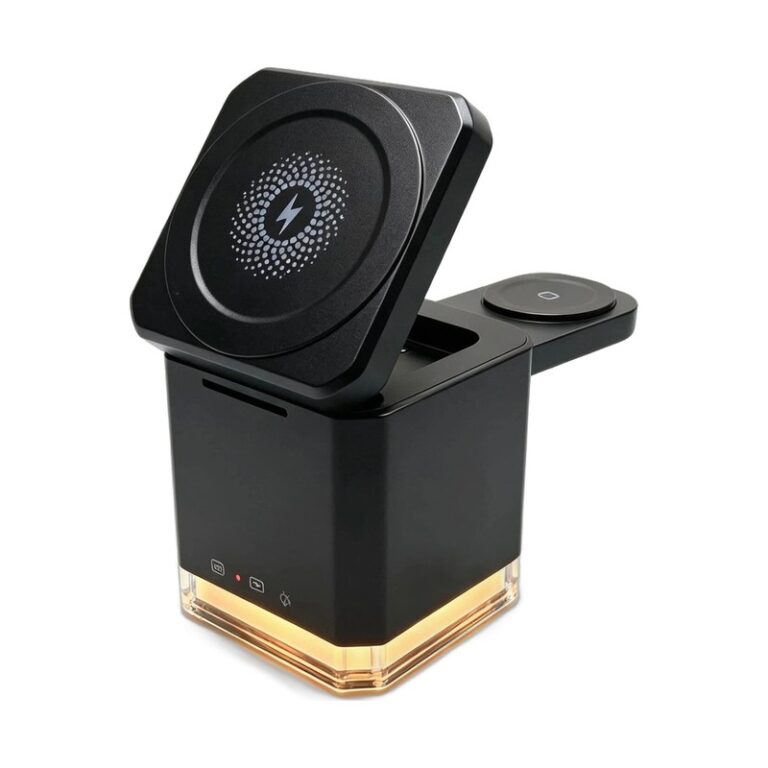
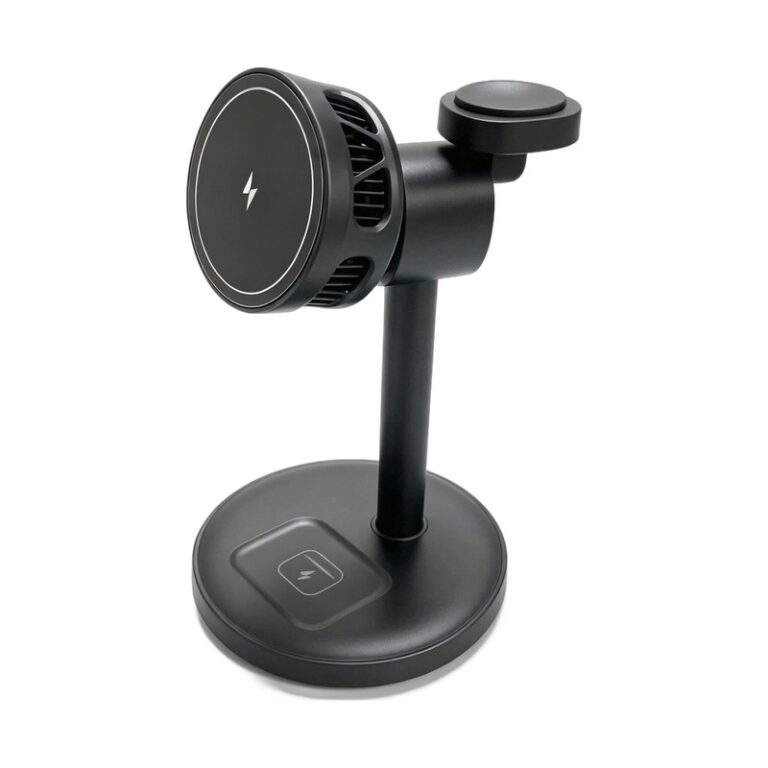
For brands, distributors, and promotional-product buyers, “Qi2” is no longer a single checkbox on a supplier quotation. The sourcing decision now involves charging power, magnetic alignment, certification status, thermal design, adapter requirements, device compatibility, and the exact wording that may appear on the product and packaging.
This guide explains how to compare a standard Qi2 wireless charger with a Qi2 25W project and how to write a clearer OEM/ODM specification before requesting samples or quotations.
What is the practical difference between Qi2 and Qi2 25W?
The original Qi2 standard introduced magnetic alignment and up to 15W charging for supported devices. The Wireless Power Consortium launched Qi v2.2.1, branded as Qi2 25W, in July 2025. According to the WPC, Qi2 25W delivers nearly 70% more charging power than the original 15W Qi2 generation.
For a buyer, however, the difference is not simply “15W versus 25W.” A higher-power project can affect the transmitter design, power input, adapter selection, coil and magnet structure, heat management, firmware tuning, enclosure materials, certification plan, packaging claims, and final cost.
Start with the target device, not the advertised wattage
A charger can only deliver the power level that the complete charging system supports. The phone, charger, input adapter, cable, alignment, temperature, case, and charging protocol all influence actual performance.
Before asking a factory for “the fastest Qi2 charger,” define the target market and device group:
- Which phone brands and models must be supported?
- Is 15W sufficient, or is certified Qi2 25W a commercial requirement?
- Will the product be sold with an adapter and cable?
- Does the project need a desktop stand, foldable travel charger, charging pad, or car charger?
- Will the product also charge a watch or TWS earbuds?
This information is more useful to an engineering team than a request that only says “25W wireless charger.”
Certification status must be written precisely
Professional buyers should distinguish among three very different statements:
- Qi compatible: a compatibility claim, not proof of WPC certification.
- Designed to a Qi specification: a development target that still does not prove certification.
- Qi Certified: the finished product has completed the applicable certification process and is listed in the WPC Certified Product Database.
The WPC states that only certified products may use the Qi or Qi2 logo. A component, coil, or charging IC previously used in another certified product does not automatically make a new finished product certified. Housing materials, coil position, shielding, firmware, and system integration can all affect wireless power transfer.
For this reason, a sourcing specification should state whether the buyer needs an already-certified model, certification for a new branded product, or only a non-logo compatibility project. The quotation should identify who owns the certification, which exact model number is covered, and whether the final branded configuration requires additional registration or testing.
What should be included in an OEM/ODM specification?
1. Charging architecture
- Required phone charging level: 5W, 7.5W, 10W, 15W, or Qi2 25W
- Number of charging positions
- Watch and earbuds output requirements
- Input interface and input power
- Required adapter and cable specifications
2. Product format
- Pad, stand, foldable station, travel charger, or automotive mount
- Target dimensions and weight
- Portrait and landscape viewing requirements
- Magnetic holding force and preferred viewing angle
3. Thermal and protection requirements
- Temperature-control strategy and derating behavior
- Foreign-object detection
- Overcurrent, overvoltage, and short-circuit protection
- Thermal validation with the intended enclosure and adapter
4. Branding and packaging
- Logo method and placement
- Housing color and surface finish
- Retail box, manual, labels, and barcode requirements
- Permitted certification and trademark artwork
- Target languages and destination markets
5. Commercial details
- Expected order quantity and annual forecast
- Sample quantity and approval procedure
- Target launch date
- Required inspection standard
- Requested compliance documents for the destination market
Why thermal design becomes more important at higher power
Wireless charging naturally produces heat, and increasing power raises the importance of alignment, coil efficiency, shielding, enclosure design, firmware, and ventilation. A 25W label does not guarantee sustained 25W charging under every condition. Charging power may be reduced when the phone or charger reaches its temperature-management threshold.
During sample evaluation, buyers should test more than the first few minutes. A useful validation plan includes charging from a low battery level, recording surface temperature, checking power behavior over time, testing with the intended adapter and cable, and repeating the test with representative phone cases.
Sample questions to send to a wireless charger supplier
- Which exact Qi version and power profile does this finished model support?
- Is the product Qi Certified, and can the certification be verified in the WPC database?
- Which phone models were used for interoperability testing?
- What adapter and cable are required to reach the stated output?
- How does charging power change during a 30- or 60-minute thermal test?
- Which parts can be customized without affecting certification or performance?
- What are the sample process, MOQ, tooling requirements, and production lead time?
- Which packaging statements and logos are legally permitted for this configuration?
Should your next product use Qi2 15W or Qi2 25W?
Qi2 15W can remain suitable for value-focused products, compact multi-device stations, and projects where cost, size, or market timing is more important than maximum charging speed. Qi2 25W is more relevant when faster certified charging is a central selling point and the project budget can support the necessary design, testing, power accessories, and certification work.
The best choice depends on the target customer, retail price, device mix, launch schedule, and certification strategy—not on the largest wattage printed in a catalogue.
Plan your private-label wireless charger project
Shinestone supports B2B wireless charger sourcing and OEM/ODM project discussions for brands, distributors, retailers, and corporate-gift buyers. To receive a useful recommendation, include your target market, preferred product format, required charging level, expected quantity, branding needs, packaging requirements, and launch schedule.
Contact our team to discuss a Qi2 or magnetic wireless charger project.
Frequently asked questions
Is every 15W magnetic wireless charger a Qi2 charger?
No. Magnetic alignment and a 15W claim do not by themselves prove Qi2 certification. Buyers should verify the exact finished product in the WPC Certified Product Database.
Can a supplier use the Qi2 logo on an uncertified product?
No. The WPC states that only certified products may use the Qi or Qi2 logo. Logo use must also follow the applicable WPC display guidelines.
Does a certified charging module make the finished product certified?
Not automatically. The WPC explains that enclosure materials, coil position, shielding, firmware, and integration can affect performance. The certification route depends on the exact subsystem and final product configuration.
What information should a buyer provide for an accurate quotation?
Provide the target market, device compatibility, charging power, product style, order quantity, branding method, packaging, compliance requirements, adapter and cable needs, and desired launch date.
Technical references: Wireless Power Consortium information on Qi2, Qi2 25W, certification, certified-product verification, and logo usage. Product capabilities and certification status should always be confirmed for the exact model and branded configuration before purchase or marketing.