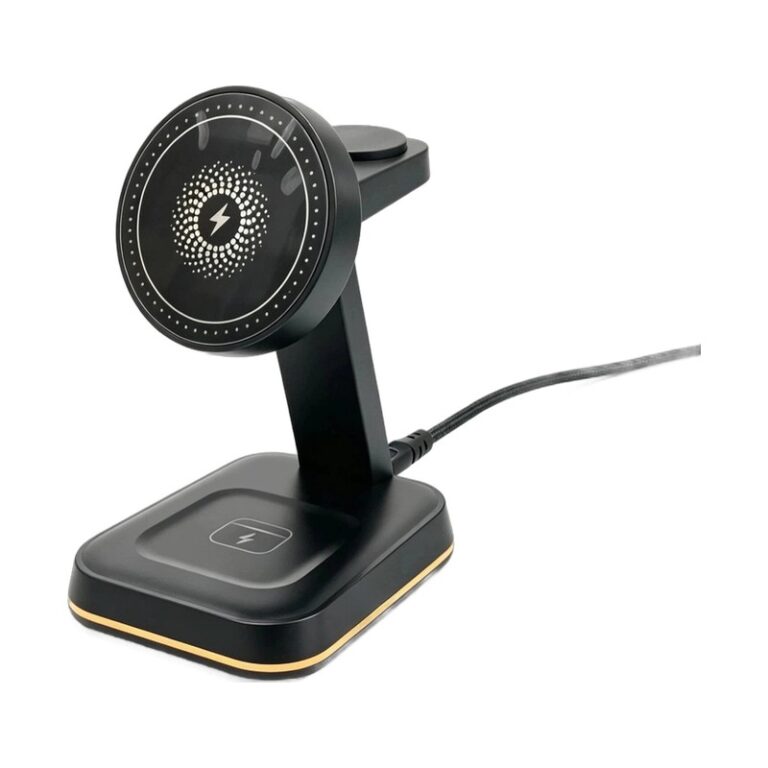
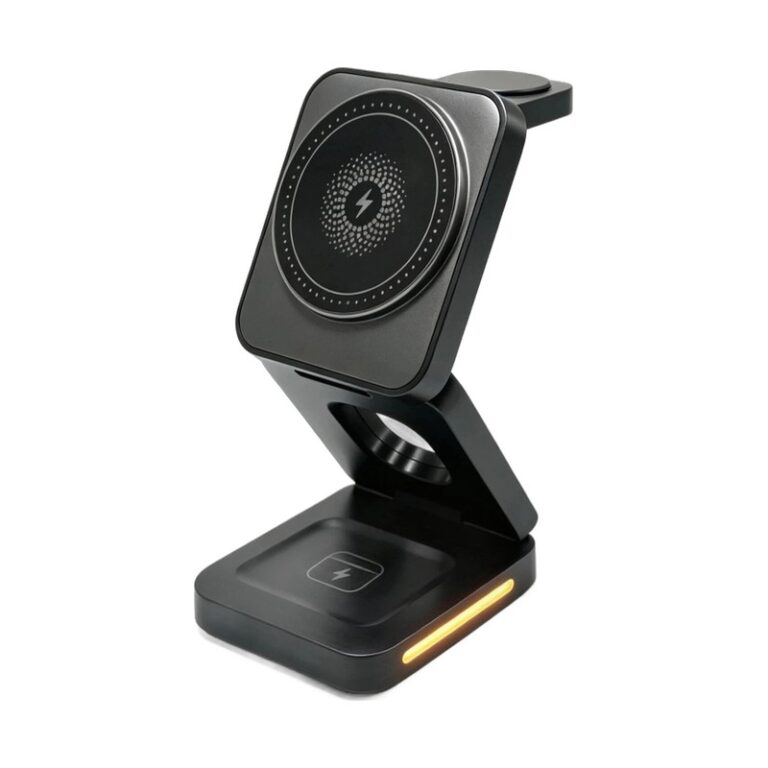
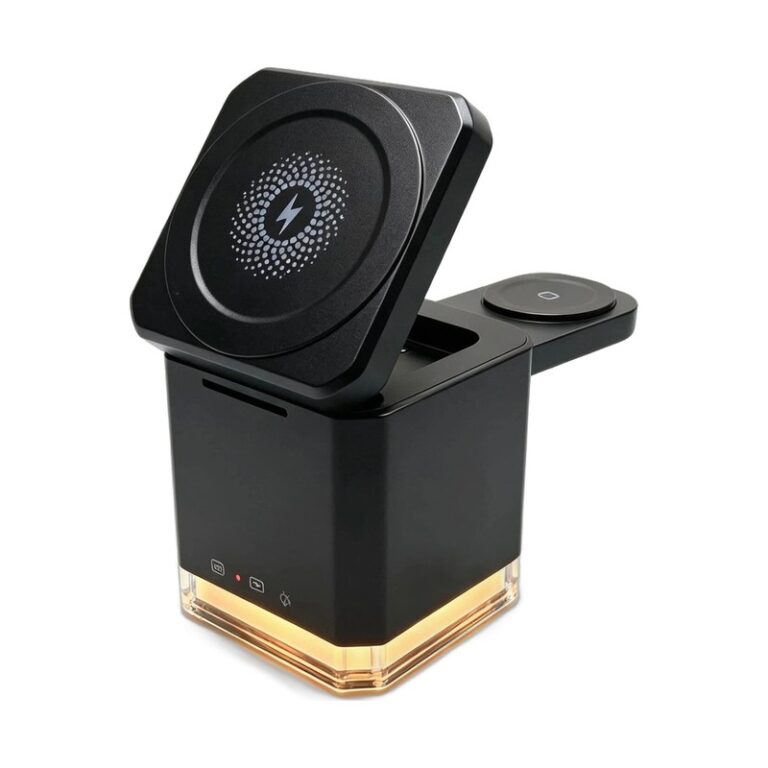
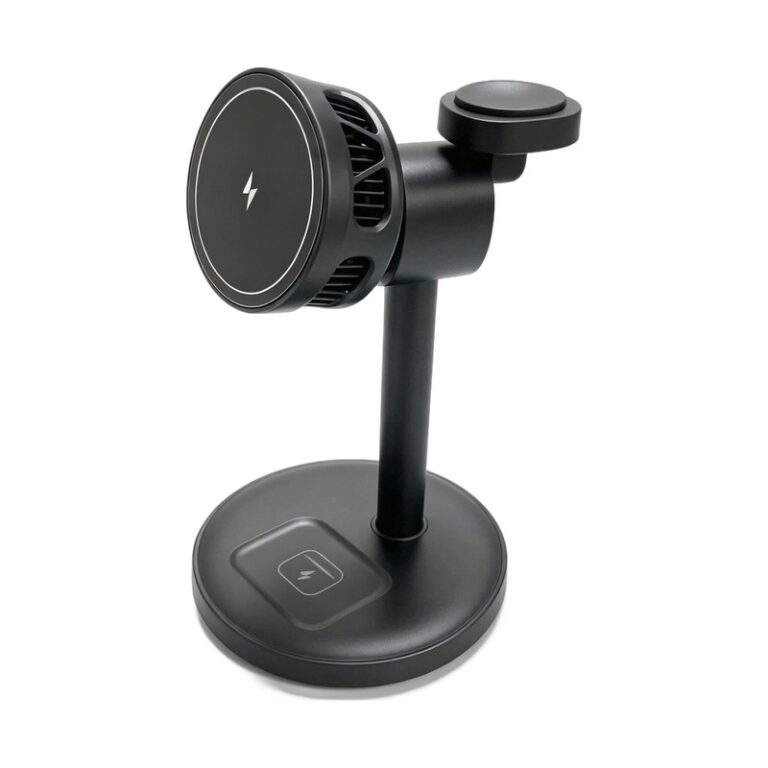
Wireless charger sample testing should answer one commercial question: is this exact product configuration ready for mass production? For B2B buyers, a sample is not approved simply because a phone begins charging. The charger, cable, adapter, firmware, enclosure, magnets, branding and packaging must be evaluated as one finished system.
This 12-point checklist helps brands, distributors and private-label buyers turn a subjective sample review into a documented approval process. It is designed for charging pads, magnetic stands, foldable travel chargers, car chargers and multi-device charging stations.
Quick answer: what should a wireless charger sample test include?
A complete wireless charger sample test should verify:
- Product identity and specification traceability
- Appearance, dimensions and mechanical construction
- Input adapter and cable requirements
- Charging performance across target devices
- Magnetic alignment and holding stability
- Thermal performance and power derating
- Foreign-object detection
- Electrical protection behavior
- Simultaneous multi-device charging
- Interoperability and certification evidence
- Branding, labeling and packaging accuracy
- Reliability, aging and transport readiness
The buyer and supplier should agree on devices, test conditions and pass/fail limits before testing begins. This prevents a sample from being approved under one setup and mass-produced under another.
1. Confirm the exact sample configuration
Start by recording the model number, sample revision, PCB or firmware version, input requirement, included cable, included adapter, housing material, color and packaging version. Photograph the sample and its labels.
This prevents one of the most expensive sourcing mistakes: testing an engineering sample and then approving a quotation for a different bill of materials. Any later component substitution should trigger a documented review.
2. Inspect appearance, dimensions and mechanical construction
Compare the sample with the approved drawing, color reference and surface-finish requirement. Check gaps, scratches, uneven assembly, sharp edges, loose hinges, unstable stands and visible adhesive. For foldable products, operate every joint repeatedly and confirm that the product remains stable in its intended viewing positions.
Measure the key dimensions and weight. A small change in geometry can affect packaging, phone clearance, watch placement or charging-coil alignment.
3. Verify the adapter, cable and input power
A wireless charger cannot be evaluated independently of its power source. Record the adapter protocol, rated output, cable type and cable length used during each test. Repeat critical tests using the exact accessories planned for sale.
If the adapter is not included, the manual and product page should clearly explain the required input. This reduces customer complaints caused by low-power adapters or unsuitable cables.
4. Build a target-device charging matrix
Do not rely on one phone. Create a matrix based on the buyer’s real market: priority phone models, watch models, earbuds cases, protective cases and operating-system versions. Record whether charging starts consistently, whether alignment is intuitive and whether the device reconnects after removal and replacement.
For each device, record input power, indicated charging status, charging duration and any interruptions. Advertised output is not the same as sustained power delivered under every condition.
5. Test magnetic alignment and holding stability
For magnetic chargers, verify more than attachment strength. The device should locate the charging position naturally, remain stable in portrait and landscape use, and release without pulling the stand off the desk.
Test representative phone cases because case thickness, magnet layout and surface friction can change both holding force and charging efficiency. For car chargers, include vibration and rotation checks using the intended vent clip or dashboard mount.
6. Measure temperature and power over time
Thermal testing is one of the most important parts of wireless charger sample testing. Measure charger and device temperatures at defined intervals rather than checking only the first few minutes. Record ambient temperature, starting battery level, device model, case, adapter and cable.
Look for repeated power cycling, unexpected disconnections or excessive derating as the system warms. The acceptable limits should be defined for the project and destination market. A stable 30- or 60-minute curve is more informative than a short peak-power screenshot.
7. Check foreign-object detection
Foreign-object detection is intended to reduce risk when an unintended conductive object is placed in the charging area. The test plan should use the appropriate test objects and methods for the product and applicable standard.
Confirm that the charger responds consistently and does not continue operating abnormally. Do not improvise unsafe test methods; use qualified personnel and agreed procedures.
8. Verify electrical protection behavior
Review the required protection functions, such as overcurrent, overvoltage, short-circuit and overtemperature protection. The exact tests should be performed with suitable equipment by trained engineers or an accredited laboratory when required.
For procurement approval, request a test summary that identifies the sample version, test condition, result and responsible party. A generic statement that a product “has protection” is not a substitute for evidence tied to the finished model.
9. Run simultaneous multi-device charging tests
A 3-in-1 charger should be tested with all charging positions active at the same time. Verify the phone, watch and earbuds functions individually, then test them together using the specified adapter.
Watch for reduced output, repeated connection sounds, LED errors, unexpected heat or competition between charging zones. The packaging should state realistic combined-performance requirements rather than adding the maximum rating of each position without context.
10. Verify interoperability and certification evidence
Ask whether the exact finished product is Qi Certified, designed for a Qi specification, or simply described as Qi compatible. These terms are not interchangeable.
The Wireless Power Consortium explains that Qi certification includes compliance and interoperability testing, and certified products can be checked in the official product database. Only certified products may use the applicable Qi or Qi2 logo. Buyers should match the certificate, brand, model and product appearance to the configuration being purchased.
Useful references: WPC Qi certification process and the WPC certified product database.
11. Approve branding, labels and packaging as one system
Check logo size, position, color, printing method and resistance to normal handling. Review the model number, input information, warnings, country-of-origin marking, barcode, manual and carton labels.
Confirm that certification marks and charging claims are permitted for the exact product. The physical sample, manual, retail box and online listing should not contradict one another.
12. Test reliability and transport readiness
The reliability plan depends on the product, price level and destination market. It may include powered aging, hinge cycling, button or LED checks, cable insertion, surface-wear testing, drop testing and packaging simulation.
The purpose is not to perform random torture tests. It is to reproduce foreseeable use and logistics conditions with documented methods. Any failure should lead to corrective action, a revised sample and re-approval of the affected items.
What should be included in a sample approval report?
A useful approval report is concise but traceable. It should include:
- Buyer and supplier project names
- Product model and sample revision
- Photos of the tested sample and labels
- Test equipment, devices and accessories
- Test conditions and acceptance criteria
- Measured results, not only “pass” or “fail”
- Open issues and responsible owners
- Approved golden-sample reference
- Sign-off date and change-control requirement
Keep one approved golden sample with the buyer and one with the factory whenever practical. Mass-production inspections can then compare appearance, function and packaging against the same reference.
Which failures should stop mass production?
Mass production should not begin when there is an unresolved safety issue, unstable charging, excessive heat, inconsistent multi-device performance, incorrect labeling, unverified certification claims or a material difference between the tested sample and production specification.
Minor cosmetic issues may be handled through an agreed defect standard, but the acceptance level should be written before production. A verbal promise to “improve it later” is not a controlled approval process.
How Shinestone supports private-label sample validation
Shinestone works with B2B buyers on wireless charger OEM/ODM projects, including product selection, sample preparation, branding, packaging coordination and mass-production planning. A useful project brief should include the target market, device matrix, charging format, expected quantity, certification needs, packaging requirements and launch schedule.
Send us your wireless charger project requirements and request a sample-validation plan.
Frequently asked questions
How many wireless charger samples should a buyer test?
One unit can support an initial design review, but multiple units provide a better indication of consistency. The appropriate quantity depends on project risk, tooling status, certification plan and order size. Buyers should agree on the sample stages and quantity with the supplier.
Is a charging animation proof of fast charging?
No. A screen animation alone does not prove sustained output. Test the complete system with defined devices, adapter, cable, temperature conditions and measurement equipment.
Can an approved charging module make the finished charger certified?
Not automatically. The finished product configuration, integration and certification route must be verified. Buyers should check the exact model in the official WPC database when certification is required.
What is a golden sample?
A golden sample is the signed or otherwise controlled reference unit that represents the approved product. It is used to compare later production for appearance, construction, function and packaging.
When should a wireless charger sample be retested?
Retesting is appropriate after changes to the PCB, coil, magnet, firmware, housing, cable, adapter, component source, branding method or other items that could affect performance, safety, certification or appearance.
This checklist is a procurement and quality-planning guide, not a substitute for applicable regulations, certification requirements or qualified laboratory testing in the destination market.