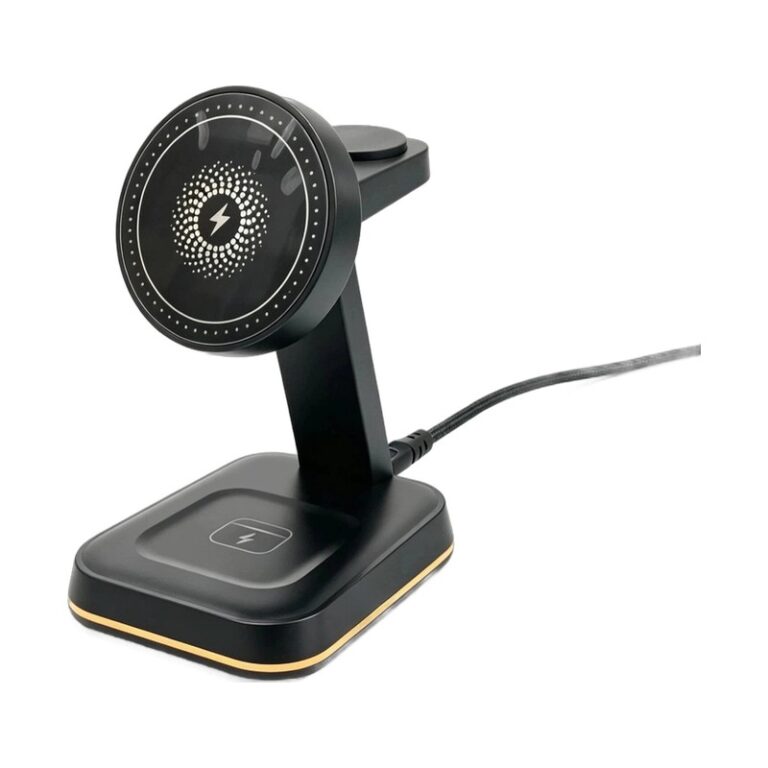
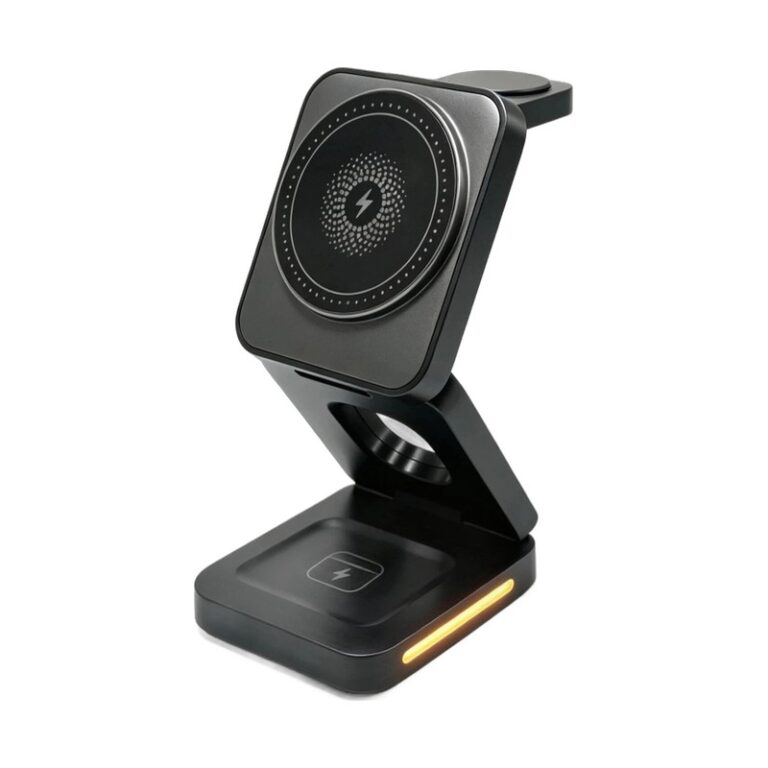
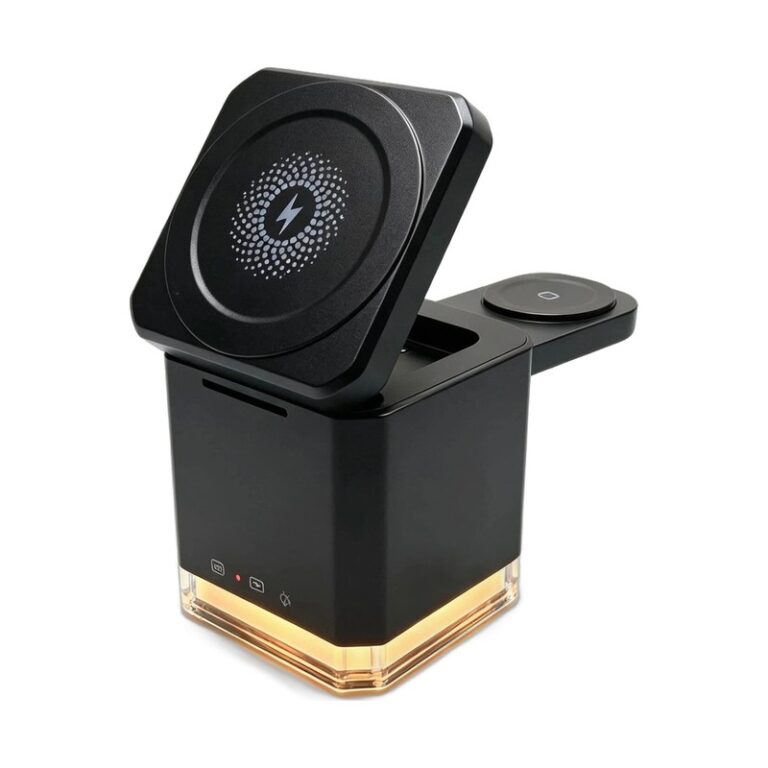
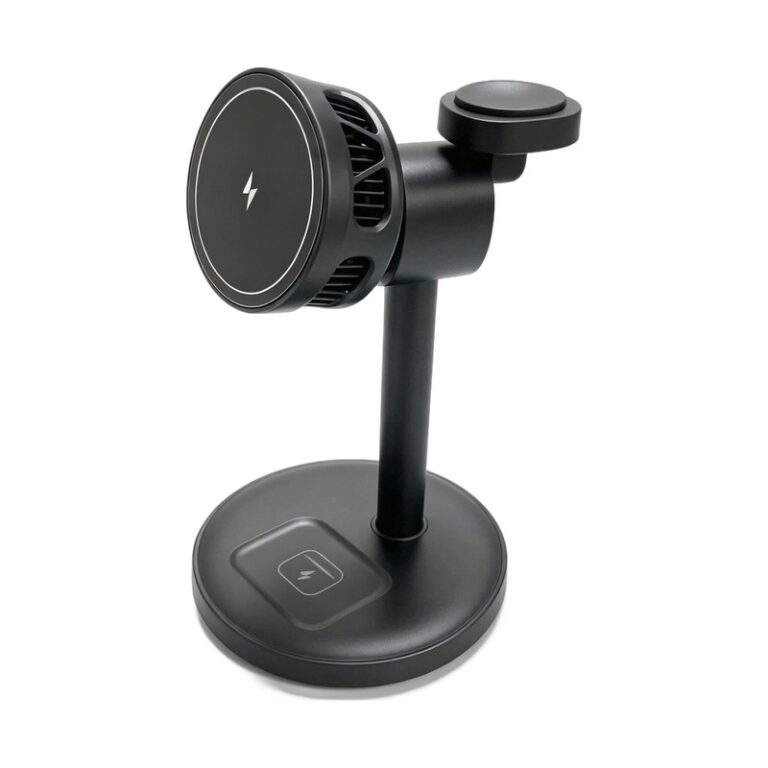
iPhone Duo Qi2 charging stand projects require more than a simple charging demonstration. A foldable phone changes thickness, balance and leverage between closed, partially open and fully open positions. A stand that works with a conventional phone may still wobble, rotate, lose ideal coil alignment or run hotter when the phone is opened.
For B2B buyers, the real approval question is: can the charger hold, align and charge the device consistently across realistic use conditions?
Quick answer: eight tests buyers should require
- Magnetic alignment in closed and open positions
- Base stability and resistance to tipping
- Hinge, camera and case clearance
- Portrait and landscape rotation
- Compatibility with intended cases
- Sustained charging and thermal behavior
- Foreign-object and protection responses
- Repeated-use durability and production consistency
Why a foldable phone changes charger validation
When a foldable phone opens, its center of gravity shifts and the larger surface creates more leverage against the charging face and stand hinge. Qi2 magnetic alignment helps position the device, but certification alone cannot prove that every stand geometry is stable for every posture, case and viewing angle. Validation must cover both the charging system and the complete mechanical assembly.
1. Magnetic alignment
Test the phone closed in portrait and landscape, partially open at supported angles, and fully open if that use is claimed. The device should settle naturally without repeated adjustment. Record any downward shift, unexpected rotation or off-center attachment.
2. Base stability
Evaluate base footprint, mass, hinge resistance and anti-slip material together. The prototype should remain stable during screen taps, removal and normal desk vibration. Compact travel chargers may need a wider deployed footprint or lower device position.
3. Hinge and camera clearance
Confirm clearance around the foldable hinge, camera module, buttons, USB-C port and the thickest approved case. Mechanical interference can stop the phone from seating flat or create pressure points over time.
4. Portrait-to-landscape rotation
Rotate the device through the complete usable range. Check for collisions with the base or arm, sudden magnet release and unwanted hinge movement. The phone must remain stable for video calls, multitasking and media viewing.
5. Case compatibility and holding force
Bare-device testing is not enough. Representative thin, protective and magnetic cases can change magnetic distance, friction and geometry. Car-charger validation should also include vibration and road-shock simulations appropriate to the mount.
6. Sustained charging and thermal performance
A charging animation is not a thermal test. Run long enough to observe temperature stabilization and power reduction. Document adapter, cable, starting battery state, ambient temperature, peak temperature, stabilized temperature, firmware and protection thresholds.
7. Protection behavior
Verify foreign-object detection plus overcurrent, overvoltage and overtemperature protection. Buyers should understand indicator behavior, shutdown thresholds and recovery after a protection event.
8. Durability and production consistency
Cycle adjustable hinges, folding arms and rotating joints. After cycling, repeat alignment, stability and charging checks. Pilot production should compare multiple units, with controls for magnet grade, polarity, coil position, hinge torque, base weight, assembly gaps and firmware traceability.
OEM approval checklist
- Does the phone self-center in every claimed posture?
- Will the stand tip or rotate during normal use?
- Are the hinge, camera and case unobstructed?
- Does temperature stabilize safely?
- Do safety functions respond consistently?
- Can every batch reproduce the approved sample?
What buyers should include in an RFQ
Specify target markets, required Qi/Qi2 status, intended use positions, supported cases, stand angles, adapter and cable requirements, housing material, finish, logo, packaging, prototype quantity and destination-market compliance documents.
Frequently asked questions
Will every MagSafe-style stand work with iPhone Duo?
Not necessarily. Electrical compatibility does not guarantee suitable stand height, hinge clearance, camera clearance or stability when the phone is open.
Is a stronger magnet always better?
No. Holding force must be balanced with alignment, ease of removal, case compatibility and stand strength.
What is the most important first-sample test?
Start with alignment, open-position stability, clearance and case compatibility. Then confirm sustained charging, temperature and protection behavior with the intended adapter and cable.
Build compatibility into the product, not just the packaging
A credible iPhone Duo Qi2 charging stand should be designed around changing device geometry, not merely tested for a charging icon. Buyers can compare our wireless charger range and review the SST-WXC2642 3-in-1 magnetic charging stand as reference formats for an OEM project.
Planning a private-label project? Contact ZZWSST with your target market, certification needs, forecast quantity, branding and packaging requirements to receive a sample-validation plan.