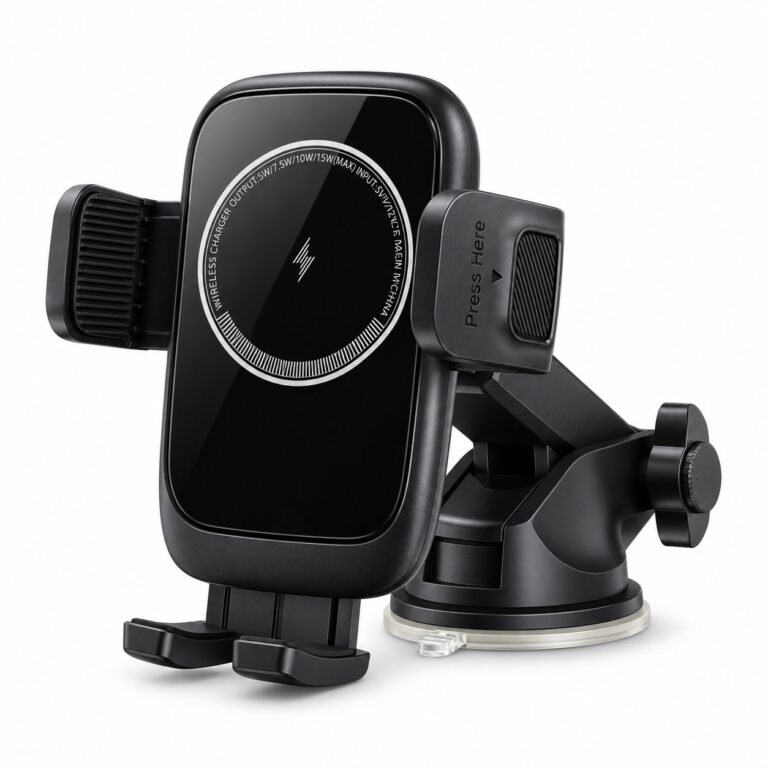
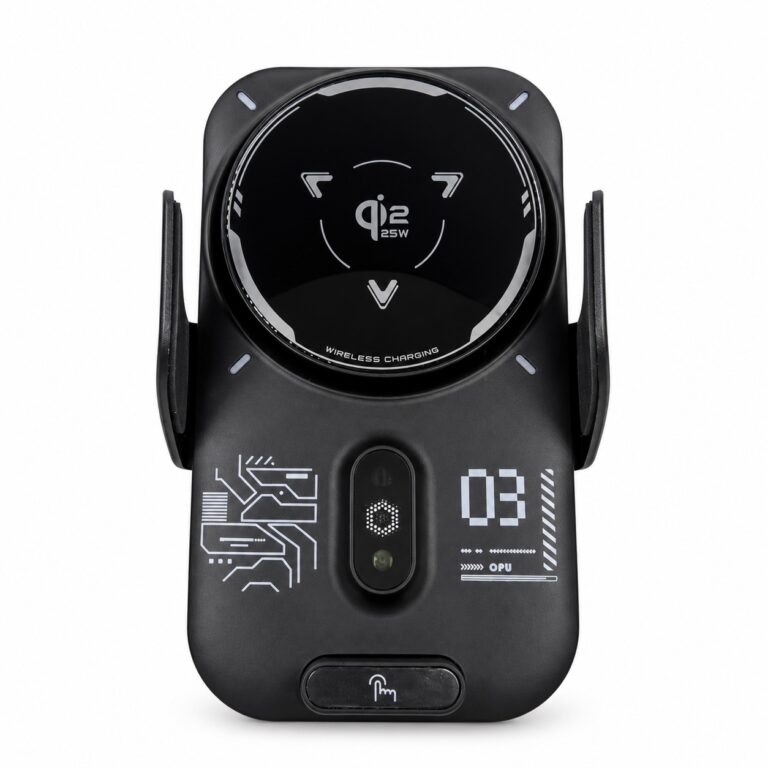
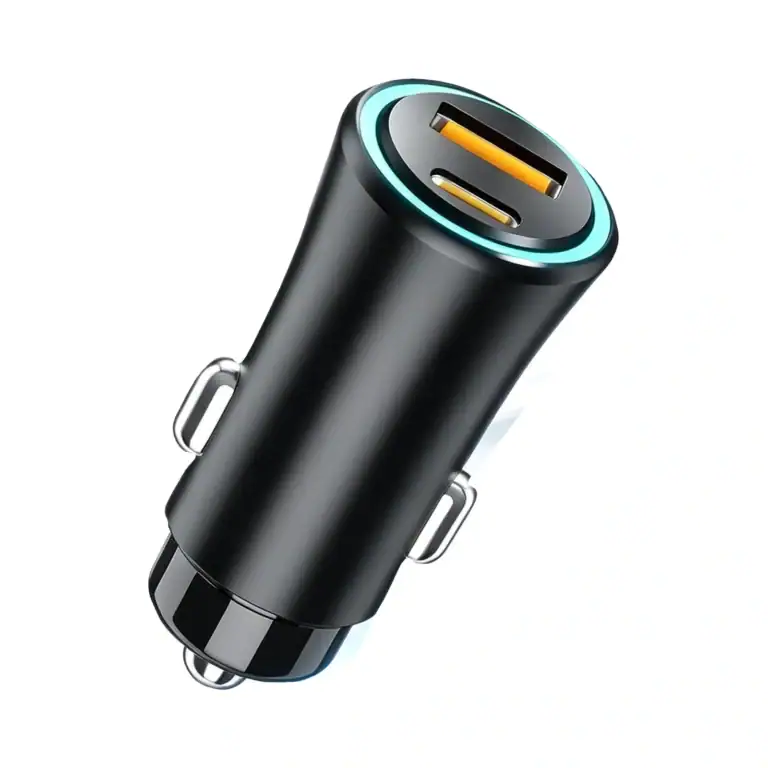
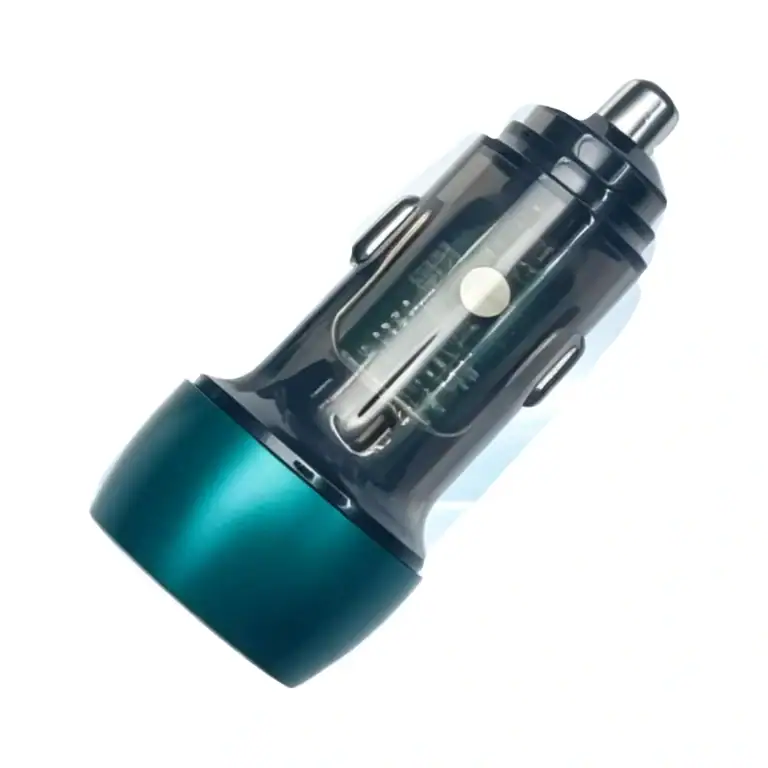
How should a B2B buyer choose a USB-C car adapter for a wireless mount? Match a listed voltage and current pair, confirm the power protocol, then test the exact adapter, cable and mount together. For a dual-port adapter, repeat the check with the other port in use and verify charging resumes after vehicle accessory power returns.
Shinestone is an OEM/ODM wireless charger manufacturer and supplier. In a car charging bundle, the socket adapter supplies wired power to the mount through a USB cable. The mount charges the phone wirelessly. Specify both models and the cable when asking for a sample or a private-label quotation.

Compare the adapter output with the mount input
A useful quotation lists the adapter’s output profiles for the port you will use and the mount’s accepted inputs. USB Power Delivery lets a connected device request power from a compatible source. Ask the supplier which protocol the mount uses for the intended input, and confirm it with the sample. USB-IF overview of USB Power Delivery
| Published model | Listed power figures | Buying decision |
|---|---|---|
| SST-CCH2612 USB socket adapter |
12–24 V DC vehicle input. USB-C PD lists 5 V/3 A, 9 V/2.7 A and 12 V/2.5 A. Individual port maxima are 30 W on USB-C and 20 W on USB-A. | Confirm the USB-C profile available with the USB-A port loaded. The published specification leaves simultaneous output open. |
| SST-WXC2701 One-touch release mount |
USB-C input lists 5 V/2 A and 9 V/2 A. Listed wireless maximum is 15 W. | The listed 9 V figures overlap. Confirm the protocol and cable with an actual sample before approving the pairing. |
| SST-WXC2762 Semiconductor-cooled mount |
Lists 5 V/3 A, 9 V/3 A and 15 V/3 A inputs with a 45 W PD power-source specification. Listed wireless maximum is 25 W. | Shortlist an adapter that meets the mount’s 45 W PD specification. SST-CCH2612 has a 30 W USB-C maximum and its published profile list lacks 15 V/3 A. |
These are comparisons of catalogue figures. At 9 V, for example, SST-CCH2612’s listed 2.7 A corresponds to 24.3 W at the adapter output. The phone’s wireless charging power depends on the mount, phone, alignment and operating conditions. Agree which figures are relevant to the retail claim and what evidence will support it.
Test shared ports and restart behavior with the quoted hardware
Two ports can draw from a shared power budget. USB-IF describes chargers with separate capacity per port and designs that allocate a shared capacity as devices connect. Request the power-sharing table for the exact adapter revision, then verify it in the bundle. USB-IF charger configurations, slide 60
- Start with the mount alone. Record the vehicle supply condition, adapter port, cable and target phone or case. Check the power negotiated at the mount input with suitable test equipment and record phone charging separately.
- Connect the second load. Use the intended accessory on the other port. Observe whether the mount’s input changes, charging stops briefly or cooling restarts. Repeat with the accessory connected first.
- Check recovery and fit. On a stationary vehicle or an agreed test bench, cycle accessory power and check whether charging resumes. Check adapter fit in the recessed socket and whether the cable has clearance beside the console.
- Approve the exact bundle. Record the adapter and mount revisions, cable, port-sharing result and agreed acceptance criteria. Carry those references into the order, packing list and artwork.
For mount selection and thermal behavior, see the magnetic and auto-clamp comparison and the car wireless charger cooling guide.
Buyer questions
Can a 30 W USB-C car adapter power a 25 W wireless mount at its listed maximum?
Compare the mount’s input requirement with the adapter’s per-port profiles. For SST-WXC2762, the published power-source specification is 45 W PD. Use a matching source and test the intended phone, cable and mount configuration.
Can I quote 50 W total for a 30 W USB-C plus 20 W USB-A adapter?
Ask for the combined-output specification. Individual port ratings describe each port’s own maximum. Base the total on confirmed simultaneous operation.
What should I send with a bundle inquiry?
Send the mount and adapter models, vehicle input, intended second-port load, phones and cases, order quantity, market and packaging brief. Specify whether the adapter and cable should be included.
Request a car wireless charging bundle sample
Ask Shinestone to review the combination you plan to sell, including model-specific sample, artwork and packaging options. Confirm the power configuration and supply terms before approving a bulk order. Request an OEM/ODM sample or quotation
Car wireless chargers · USB car adapters · Shinestone factory information