Should a private-label car wireless charger use magnets or an automatic clamp? Choose around the intended phone-and-case combination first, then specify the vehicle mounting base and power adapter. A magnetic charging head and an auto-clamp cradle solve different holding problems; neither the shape nor a headline wattage proves that the complete setup suits your customers.
This guide helps importers, accessory brands and distributors define a sellable car-charging configuration before requesting samples. It compares two real Shinestone models, separates catalogue ratings from verified device performance, and explains what belongs in a complete quotation.
1. Start with the customer’s phone, not the charger’s maximum wattage
A buyer selling primarily to users with suitable magnetic phones and cases may shortlist a magnetic head. A range intended for several phone shapes may instead benefit from a cradle with adjustable side arms. However, a clamp’s physical grip does not establish wireless-charging compatibility, and magnetic attachment does not establish charging speed.
Build a short device matrix: exact phone model, case model, combined dimensions and weight, camera protrusion, desired viewing orientation, and required charging behavior. Include the case customers will actually use. Apple advises removing thick, metal or battery cases when an iPhone charges slowly or fails to charge wirelessly, and warns that objects between the phone and charger can affect performance. See Apple’s wireless-charging guidance.
Practical buying decision: if the target phones and cases are not yet defined, do not approve packaging that promises universal compatibility. Ask for a sample configuration and complete the device matrix first.
2. Compare the holding mechanism and the charging specification separately
| Selection point | SST-WXC2542 | SST-WXC2513 |
|---|---|---|
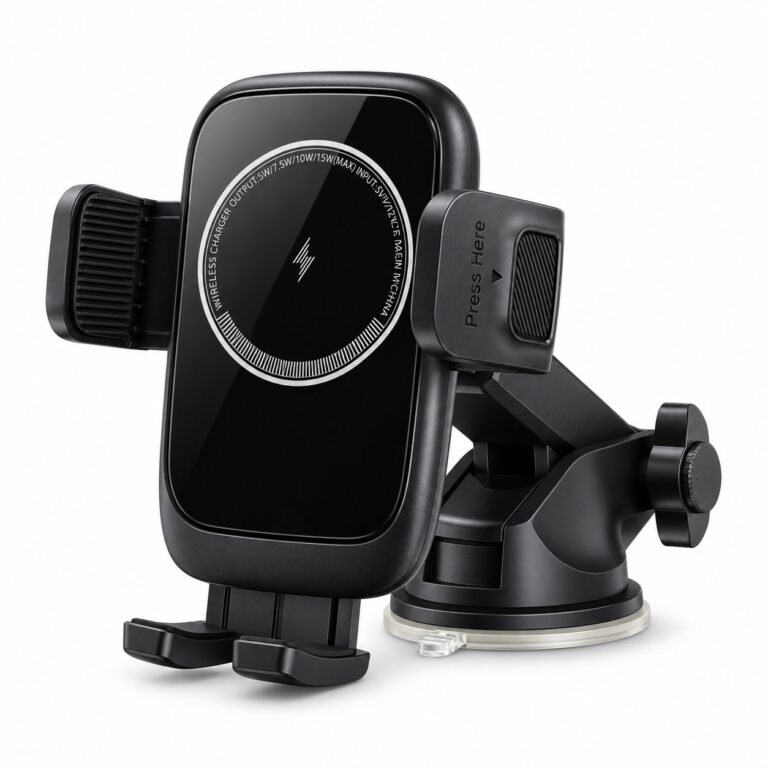
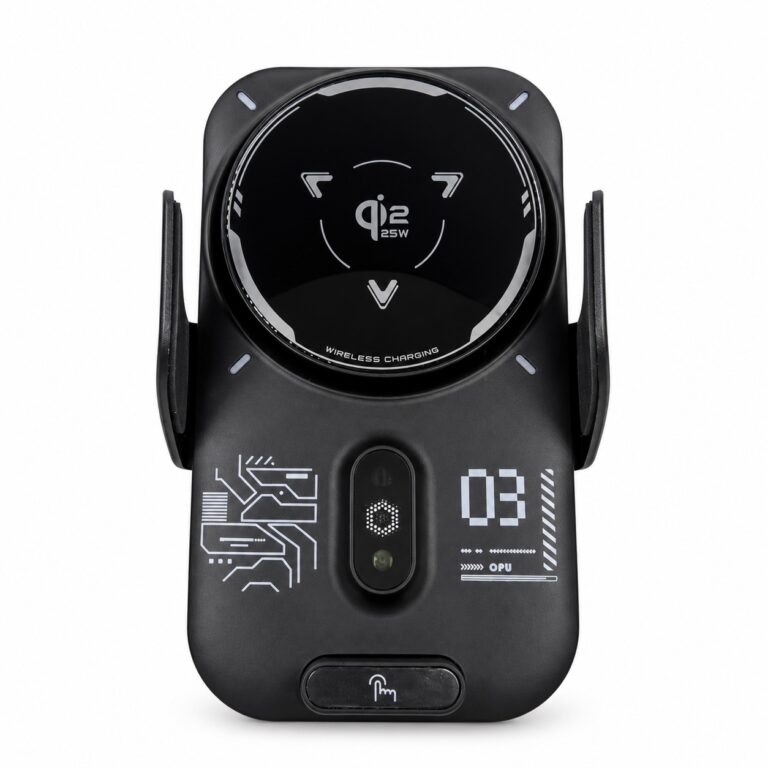
| Product format | Circular magnetic charging head | Infrared-sensing cradle with rear touch control |
| Listed features | Fan cooling and colorful breathing light | Gloss-face PC+ABS body; approximately 118 g net weight |
| Catalogue input | USB-C; 15 V/2 A, 9 V/3 A or 5 V/3 A, listed as PD30 W | 5 V/2 A or 9 V/1.67 A |
| Listed wireless output steps | 25 W maximum, 15 W, 10 W, 7.5 W and 5 W | 15 W, 10 W, 7.5 W and 5 W |
| Configuration to confirm | Phone/case magnetic fit, ring arrangement, mounting base and adapter | Phone/case fit, coil position, opening/release behavior and mounting base |
These are published catalogue specifications, not comparative test results. Actual wireless output depends on the receiving device, supported protocol, suitable adapter and operating conditions. No device-specific charging speed or Qi/Qi2 certification is established by this table.
Review the original product details for SST-WXC2542 magnetic car wireless charger and SST-WXC2513 infrared car wireless mount. Request confirmation of the exact supplied version rather than treating every accessory shown in marketing as included.
3. Specify the vehicle-side mount as its own item
“Magnetic” describes the phone-to-charger interface; it does not tell you how the charger attaches to the vehicle. The same purchasing conversation must identify the vent clip, dashboard base or other mounting accessory available for the selected version.
- For a vent installation: provide photos and dimensions of representative vents. Check the louver direction, blade depth, clip engagement and clearance for the phone and cable. Do not assume that a clip fits every vent design.
- For a dashboard installation: identify the surface material, curvature and proposed base. Ask for the installation instructions and applicable limitations before agreeing on a bundle.
- For either location: review visibility, access to controls and cable routing against the vehicle manufacturer’s instructions and applicable local requirements. Conduct fitting checks while parked.
Approve the mounting base together with the charging head. Replacing the base after a sample review creates a different configuration that needs its own fit assessment.
4. Quote the power source and cable with the charging head
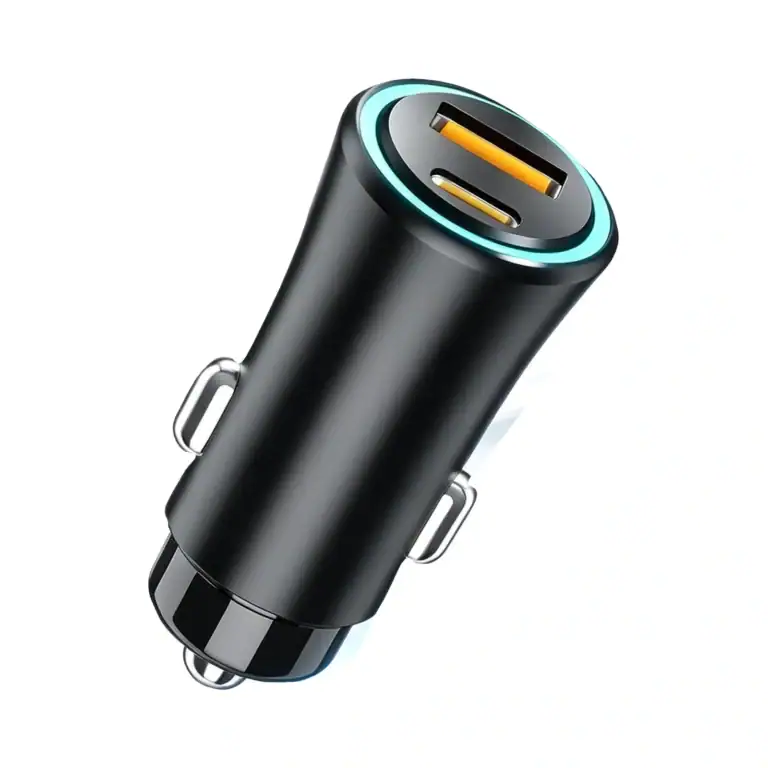
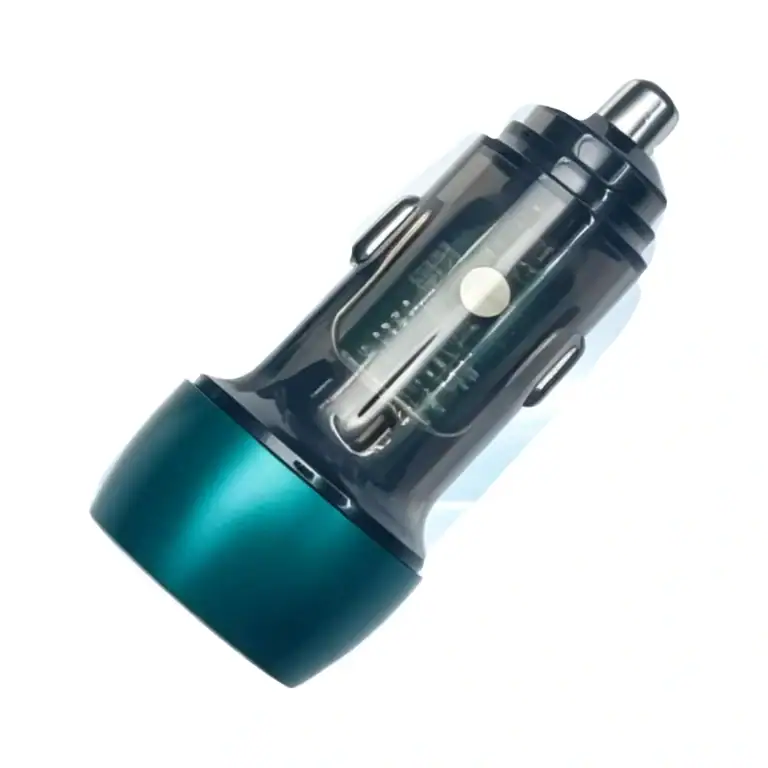
A USB-C connector alone does not describe the available power modes. Record the adapter’s supported output profiles, the cable specification and the charger’s required input. For SST-WXC2542, the product page lists PD30 W input requirements; do not substitute an unspecified vehicle USB port and assume the listed maximum remains available.
For a bundled offer, ask the supplier to identify the exact adapter and cable models in the quotation. For a charger-only offer, state the required power source clearly in the product instructions. Browse Shinestone USB car chargers as a separate product category, then confirm electrical suitability for the chosen wireless charger. This is not a blanket compatibility claim for every pairing.
5. Turn the shortlist into an approval-ready configuration
Keep one configuration sheet linking the charging head, vehicle mount, adapter, cable, target phone/case list and intended market. Record what is included in the retail box and what the customer must supply. That makes two supplier offers more meaningfully comparable than price and maximum wattage alone.
If Qi or Qi2 certification is a purchasing requirement, ask for the product’s registration details. The Wireless Power Consortium recommends matching the product, brand and type number against its database; a logo or a “compatible” description alone is not sufficient verification. See WPC’s certification verification guidance. Certification status for the specific Shinestone configuration must be confirmed separately.
For the next approval stage, use our wireless charger sample-testing checklist and B2B compliance-document guide. These complement the selection decision; they do not replace a device-specific assessment.
Buyer questions
Is a magnetic car wireless charger always better than an auto-clamp model?
No. A magnetic format may suit a defined magnetic phone/case range. A cradle may suit a different physical-fit brief. Choose after assessing attachment, coil alignment, vehicle mounting and the actual devices—not appearance alone.
Does a 25 W catalogue rating mean every phone charges at 25 W?
No. A listed maximum is not a promise for every receiving device. Ask for the exact phone, case, input adapter, protocol and test conditions behind any device-specific speed claim.
Can we quote a car wireless charger without including an adapter?
Yes, a charger-only configuration can be discussed, but its required input must be explicit. Agree on box contents, instructions and the suitable adapter specification before comparing prices.
Request a configuration-based quotation from Shinestone
Send the selected model, target phones and cases, vehicle mounting preference, adapter/cable requirements, quantity, destination and branding or packaging brief. Shinestone can review available OEM/ODM options for that configuration; samples, documentation, pricing and delivery terms require project-specific confirmation.
Request car wireless charger samples or a quotation, explore the car wireless charger range, or view our factory video and production images.
Product specifications checked against Shinestone’s published model pages on October 31, 2026. This article is a sourcing guide, not a report of completed compatibility or performance testing.