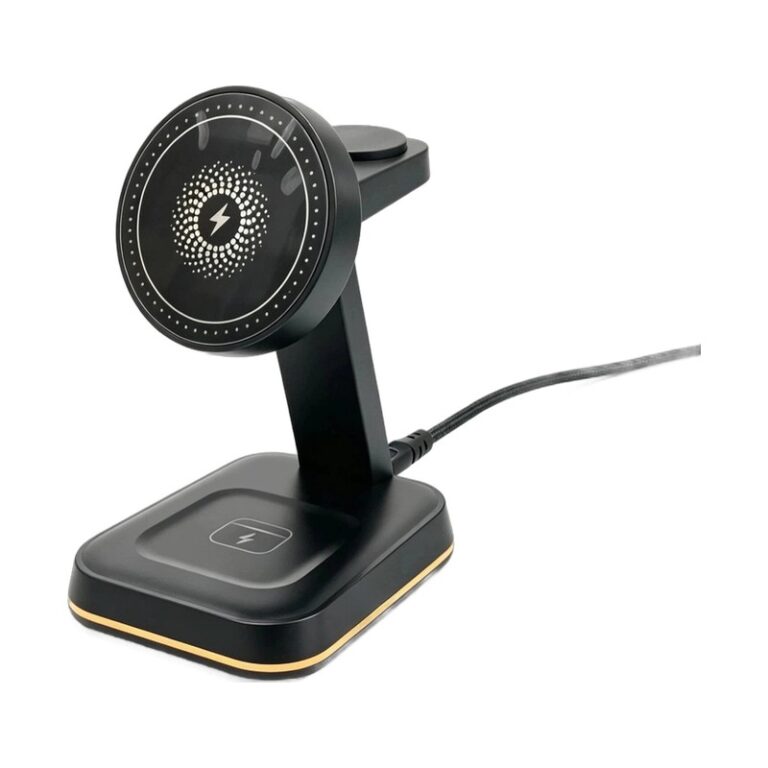
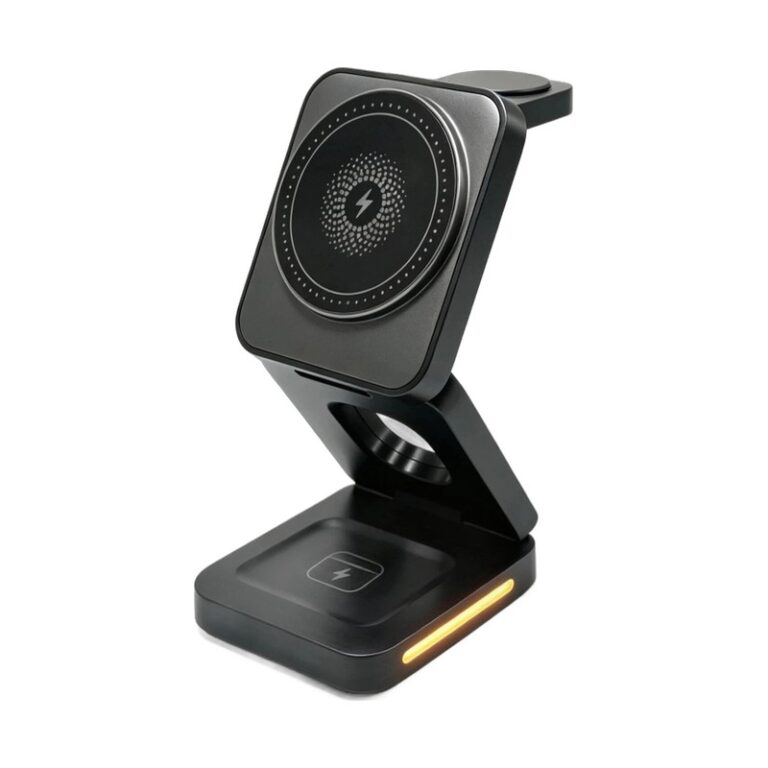
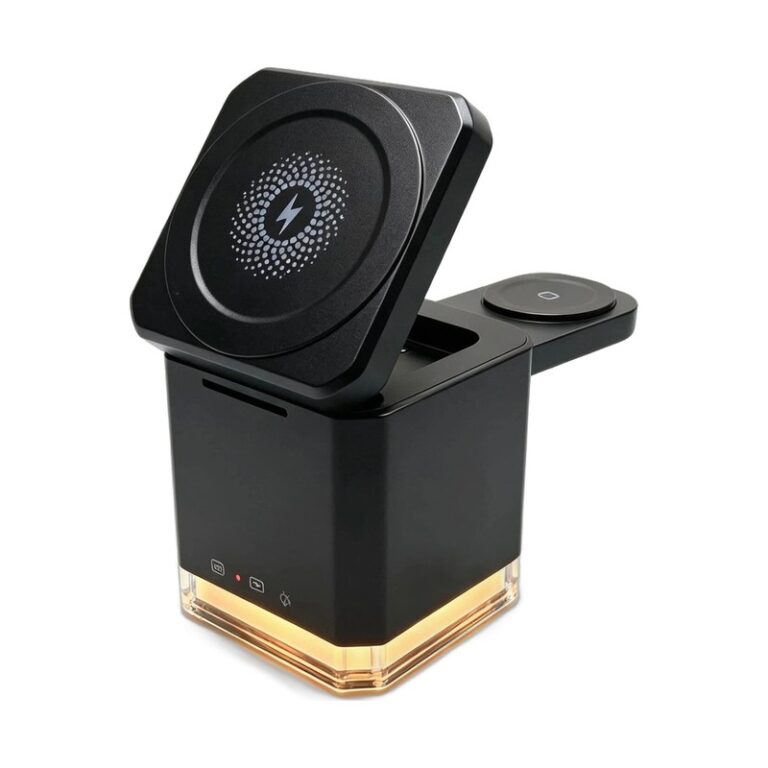
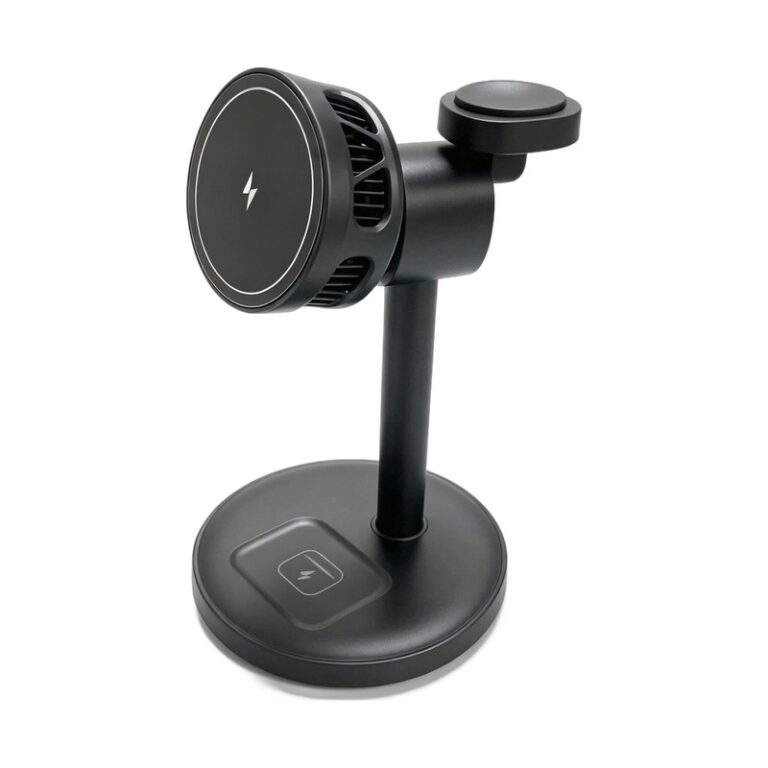
Short answer: Branded wireless charger customization turns a standard charging platform into a recognizable product by coordinating its appearance, packaging, product language, and sales presentation around one clear market position. Using WXC2641 as a visual example, a brand could align the housing palette, contrasting accent ring, logo treatment, charging-zone graphics, packaging, and online merchandising without changing the product into something buyers no longer recognize.
This is different from simply placing a logo on an existing charger. Good private-label design gives buyers a reason to remember the product: it may look more appropriate for an executive desk, a gaming setup, a travel collection, a corporate gift program, or a premium electronics range. The factory’s role is to translate that brand direction into repeatable materials, artwork, samples, and packaging while preserving usability and truthful product claims.
Below is a brand-development approach for importers, distributors, retailers, promotional-product companies, and consumer-electronics brands that want a branded wireless charger rather than another generic listing.
What is branded wireless charger customization?
Many projects begin with disconnected requests: make the body black, print a white logo, and add a color box. The result may be functional, but it rarely communicates who the product is for or why it belongs to a particular brand.
A stronger project starts with one positioning sentence. For example: “a quiet premium charger for hotel rooms,” “a bold desktop accessory for gaming retailers,” or “a compact branded gift for international sales teams.” That sentence becomes the filter for every visible decision. Color, logo size, icon style, packaging copy, photography, and even the amount of information shown on the box should support the same idea.
What makes WXC2641 a useful canvas for brand customization?
In the supplied product image, WXC2641 has a foldable multi-device layout, a dark body, clearly separated charging areas, and a highly visible contrasting ring around the raised phone-charging surface. These elements create several branding layers without requiring every surface to carry a logo.
- Main body: establishes the primary color and perceived category.
- Accent ring: creates a recognizable visual signature from a distance.
- Charging-zone graphics: explain use and can follow a consistent icon style.
- Logo area: identifies the brand without overwhelming the industrial design.
- Folded and open states: provide two different images for retail and e-commerce storytelling.
The exact colors, finishes, printing methods, charging functions, compatibility, and order requirements must be confirmed with the factory. The purpose of this example is to show how one existing structure can support several distinct brand identities.
Five brand directions for the same wireless charger platform
1. Premium executive desk
For office-supply distributors, corporate procurement, or premium business gifts, the design language should be controlled and understated. A charcoal, graphite, or deep navy body can be paired with a muted metallic or brand-color ring. A small logo placed away from the charging symbols usually looks more refined than a large central mark.
The packaging can use restrained typography, a clean open-state image, and a short message about desk organization. A sleeve, gift box, or personalized card may create more perceived value than adding decorative graphics to the charger itself.
2. Technology and gaming retail
A technology-focused brand can treat the accent ring as the hero element. A vivid orange, electric blue, green, or other approved brand color can connect the charger to an existing accessory range. The rest of the body can remain dark so the accent remains intentional rather than visually noisy.
Product photography should show the open geometry, multi-device layout, and strong silhouette. Packaging can use higher-contrast graphics and clearer feature callouts, but claims must still match the final tested configuration. The goal is a recognizable family look across the charger, cable accessories, website banners, and retail shelf.
3. Travel and compact-living collection
For travel retailers, small apartments, or hybrid workers, the folding transformation becomes the main story. The brand should show the product both closed and ready for use, with scale and packing context. A calm neutral palette can help the charger sit naturally beside luggage, organizers, and mobile-work accessories.
In this direction, packaging size, internal protection, and clear setup graphics matter more than decorative effects. The content should explain what the buyer needs to carry and what accessories are included, without promising compatibility that has not been confirmed.
4. Corporate gift and campaign edition
Corporate-gift buyers often need a product that can represent different clients or events. WXC2641’s accent area, packaging sleeve, insert card, and outer label can form a campaign system. The core charger may remain consistent while client-specific branding changes in controlled locations.
This approach can protect the industrial design and simplify repeat orders. It also gives the gift buyer several levels of personalization: product logo, color accent, message card, box sleeve, and shipping carton label. The factory should confirm which elements can change at each order quantity.
5. Retailer-exclusive product family
A retailer may want one visual identity across several charging products. Instead of making every model identical, define repeatable brand codes: one body-color family, one accent-color rule, one icon system, one logo position, and one packaging grid. WXC2641 can then sit beside other chargers as part of a coherent range.
This is especially useful for private labels that expect to add new models over time. The design system reduces random decisions and helps customers recognize the brand before reading the product name.
How should a brand combine color, logo, icons, and packaging?
Think of customization as a visual hierarchy rather than a list of separate options.
| Brand layer | Primary purpose | Useful design question |
|---|---|---|
| Housing palette | Sets the category and perceived value | Should the product feel quiet, bold, warm, technical, or premium? |
| Accent detail | Creates recognition at a glance | Which single color or finish can become the product signature? |
| Logo | Identifies ownership | Where is the smallest clear placement visible in normal use? |
| Icons and labels | Guide operation | Can users understand the charging areas without visual clutter? |
| Packaging | Explains the product and closes the sale | What must the buyer understand within five seconds? |
| Photography | Builds trust online | Do the images show the real product, scale, open state, and use context? |
A useful rule is to let one element lead. If the accent ring is bright, the logo and packaging should not compete with it. If the product is intended as an executive gift, the box and insert can carry more brand expression while the charger remains discreet.
How can product content make customization more valuable?
Customization creates value only when the product page explains it clearly. Buyers should be able to understand the product’s role, intended environment, and brand story before they reach the technical table.
For a WXC2641-based private-label project, a useful content set may include:
- a clean hero image showing the actual commercial finish;
- an open-and-folded comparison;
- a close-up of the accent, logo, and charging-zone graphics;
- a real desk, travel, retail, or gifting scene that matches the chosen positioning;
- a package-content image with only the confirmed accessories;
- a concise compatibility and input note based on the final specification;
- a B2B call to action for color, logo, packaging, and project evaluation.
This structure is also useful for GEO because it answers specific buyer questions in direct language. Search engines and AI systems can more easily understand a page when the product, use case, customization scope, limitations, and next action are stated explicitly.
What should not be changed only for visual effect?
A distinctive appearance should never compromise product truth or usability. Avoid decorative changes that obscure charging positions, reduce legibility, interfere with folding parts, or create unsupported performance and certification claims. Any change to materials, surface thickness, magnets, charging modules, electronics, firmware, or structural parts needs technical review rather than visual approval alone.
Likewise, do not place Qi, Qi2, safety, recycling, or market-access marks on the product or packaging unless the final commercial configuration is entitled to use them. The exact certified product should be checked in the Wireless Power Consortium product database when Qi-related claims are planned.
A simple brand brief for a WXC2641 customization project
Before requesting artwork, write a one-page brand brief using these six decisions:
- Target buyer: Who will purchase or receive the product?
- Use environment: Office desk, hotel room, travel bag, retail shelf, or gift program?
- Brand personality: Premium, minimal, energetic, technical, sustainable, or promotional?
- Signature element: Which color, accent, finish, or graphic should customers remember?
- Branding level: Product logo only, coordinated packaging, or a complete product-family system?
- Sales story: What is the single most important reason this version belongs in the buyer’s range?
The factory can then evaluate available processes, artwork areas, color references, sample requirements, packaging formats, and production feasibility. This keeps creative decisions connected to a commercial objective.
Frequently asked questions
How can a standard wireless charger look unique without new tooling?
Use a coordinated identity across available colors, accent details, logo placement, icons, packaging, inserts, and photography. Feasibility depends on the model and order scope, but a consistent visual system can create stronger differentiation than several unrelated cosmetic changes.
What is the most visible customization area on WXC2641?
Based on the supplied image, the contrasting ring around the raised phone-charging area is a strong visual signature. Its prominence makes it useful for brand-color exploration, subject to factory confirmation of available materials, processes, durability, and color tolerance.
Should a private-label logo be large?
Not necessarily. A smaller logo in a clear, repeatable position often looks more premium and leaves functional symbols easier to understand. The correct size depends on viewing distance, surface shape, marking method, and brand style.
Can one wireless charger platform serve different markets?
Yes, the same basic platform may support different brand directions through approved visual and packaging choices. However, product specifications, compatibility, accessories, labels, and compliance must remain accurate for each commercial version.
What makes custom packaging effective?
Effective packaging communicates the intended use, shows the real product clearly, lists confirmed contents, and follows one visual hierarchy. It should help the buyer understand the offer quickly rather than repeat every available feature.
Does visual customization change certification requirements?
It can. The effect depends on what changes and the applicable market or certification route. The responsible factory and test laboratory should review the final branded configuration before logos or compliance claims are printed.
Turn an existing charger into a recognizable brand asset
WXC2641 shows how branded wireless charger customization can make an existing structure more than a generic product. The opportunity is not to decorate every surface. It is to choose a clear market position, give one visual element priority, coordinate product and packaging, and present the final version with accurate, useful content.
Shinestone supports B2B wireless charging and private-label project evaluation. Explore our wireless charger range, learn more about Shinestone, or contact us with your target market, brand style, color references, logo artwork, packaging direction, and expected order quantity.