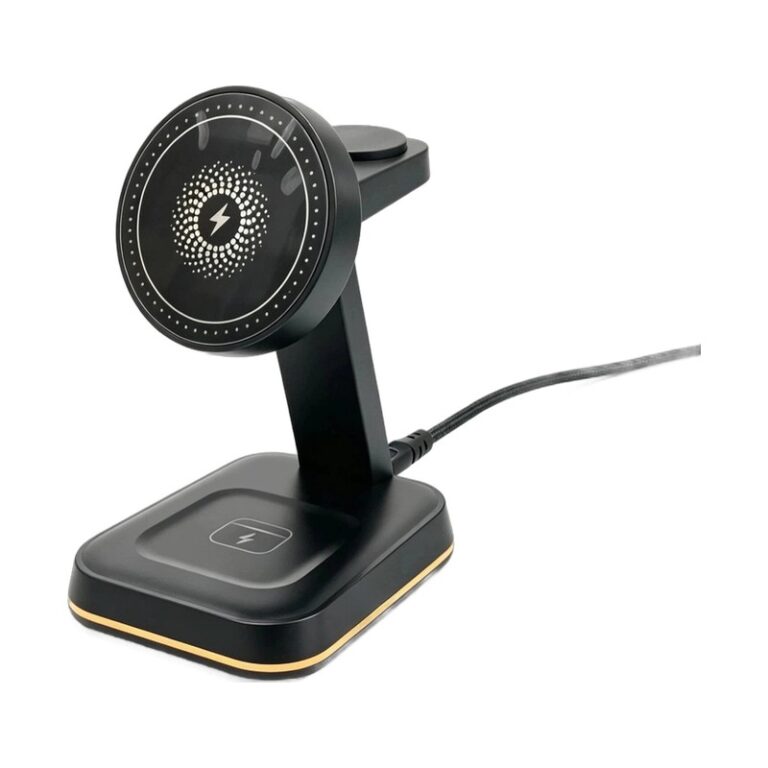
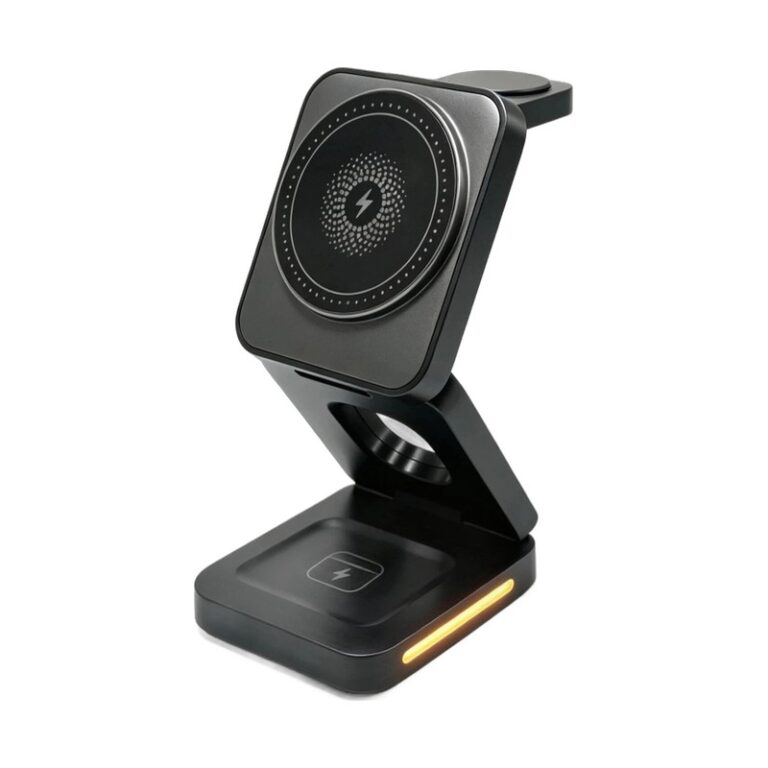
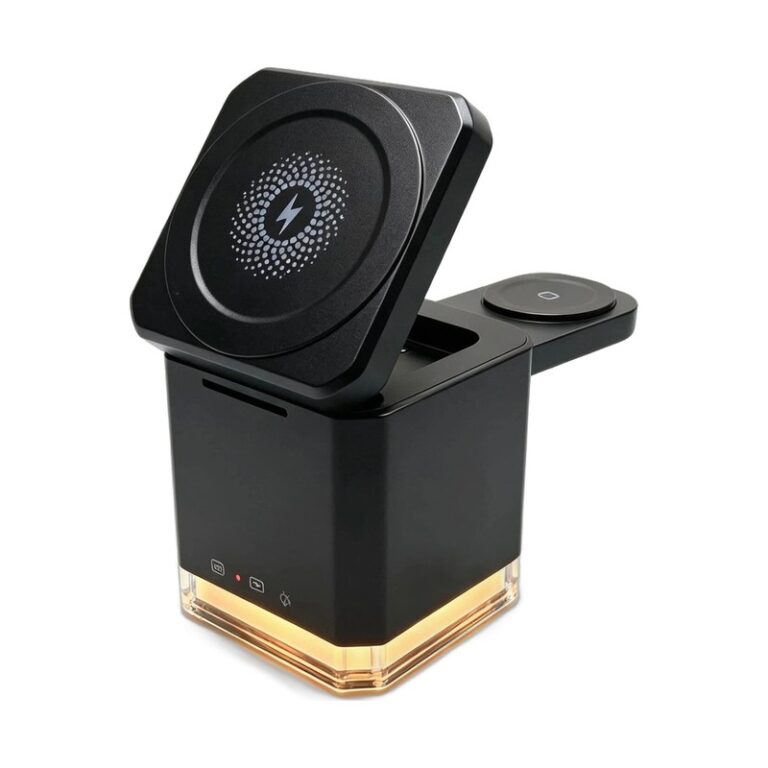
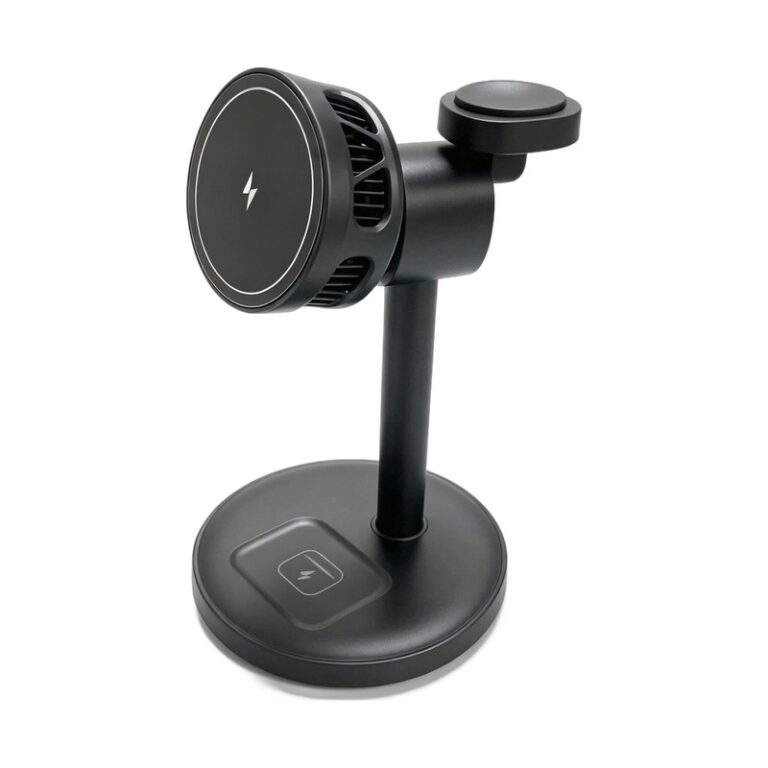
Short answer: To source a reliable private-label 3-in-1 wireless charger, buyers should verify device compatibility, real output at each charging position, thermal and foreign-object protection, adapter requirements, mechanical durability, certification scope, customization options, sample approval, and batch-level quality control before placing a mass-production order.
A 3-in-1 wireless charging station combines charging positions for a phone, a smartwatch, and wireless earbuds in one product. It is attractive for consumer-electronics brands, distributors, corporate-gift programs, and retailers because it reduces cable clutter and creates a higher-value product bundle. However, three charging positions also create more compatibility, heat-management, and quality-control risks than a single charging pad.
This sourcing guide explains what an importer or brand owner should confirm with a 3-in-1 wireless charger manufacturer before approving a private-label order.
What should buyers check first when sourcing a 3-in-1 wireless charger?
Start with five questions:
- Which phone, watch, and earbuds models must the charger support?
- What is the verified output of each charging position?
- Which power adapter and cable are required to reach the stated output?
- Which safety tests and certifications apply to the exact product configuration?
- Can the supplier provide a production sample that matches the approved specification?
These questions prevent a common sourcing mistake: selecting a product from appearance alone and discovering compatibility or temperature problems only after packaging has been printed.
1. Define the target device ecosystem
“3-in-1” does not automatically mean universal. The phone charging area may use a magnetic alignment system or a standard Qi charging surface. Watch charging modules may differ between device ecosystems, and earbuds cases vary in coil position and charging requirements.
Send the manufacturer a written compatibility list with the exact phone, watch, earbuds, case, and power-adapter combinations that matter to your market. Ask for test records using those devices, not only a general statement such as “compatible with most devices.” If magnetic alignment is part of the product, also verify performance with commonly used protective cases.
2. Verify power claims at every charging position
Request a specification that separates the phone, watch, and earbuds outputs. Also ask whether the advertised power is measured with one device or with all three positions active at the same time.
For example, the SST-WXC2651 3-in-1 wireless charging stand supports up to 15W for compatible phones, 3W for watches, and 5W for TWS earbuds, with a USB-C input. These figures describe different charging positions and should not be added together and presented as a single-device charging speed.

The final charging speed also depends on the receiving device, power adapter, cable, alignment, battery state, and temperature. A responsible supplier should state these conditions clearly in the manual and marketing materials.
3. Confirm whether Qi or Qi2 claims are certified
The Wireless Power Consortium states that only products that pass its certification process may display the Qi or Qi2 logo. Buyers should therefore distinguish between an independently verified certification and general compatibility with Qi-enabled devices.
When certification is required, request the exact Qi ID and verify it in the official product database. Make sure the registered manufacturer, product name, power profile, and model correspond to the unit being ordered. Do not assume that a certificate for a similar model, internal module, or earlier version automatically covers the final private-label product.
For reference, Qi2 introduced magnetic alignment and up to 15W charging, while the newer Qi2 25W standard is based on Qi specification version 2.2.1. Product descriptions, packaging, and logos should match the actual certified version and power profile.
4. Review heat management and protection features
A multi-device charging station can produce more heat because several coils and control circuits may operate simultaneously. Ask how the design handles:
- overcurrent and overvoltage protection;
- overtemperature protection;
- foreign-object detection (FOD);
- coil alignment and charging stability;
- heat dissipation around the phone and watch modules;
- continuous operation with all charging positions active.
During sample evaluation, test charging from a low battery level and repeat the test under realistic room temperatures. Record surface temperature, interruptions, unusual noises, indicator behavior, and charging time. Testing only for a few minutes is not enough to evaluate thermal stability.
5. Inspect mechanical design and daily-use durability
For a desktop stand, evaluate base stability, viewing angle, magnet holding force, watch-module support, earbuds placement, and cable routing. For a foldable product, test the hinge repeatedly and check whether it becomes loose. For travel models, verify folded size, weight, scratch resistance, and protection of charging surfaces.
A useful sample checklist includes:
- one-handed phone placement and removal;
- stable support with different phone sizes;
- alignment with and without an approved magnetic case;
- watch and earbuds placement without interference;
- anti-slip performance on a smooth desk;
- USB-C connector strength and cable fit;
- indicator brightness in a dark room;
- surface finish, color consistency, gaps, and visible marks.
6. Match the adapter and cable to the product
Wireless charging performance depends on the input power. Ask the supplier to state the required adapter protocol, voltage, current, and minimum rated power. Confirm whether the commercial package includes an adapter, a cable only, or neither.
This information affects landed cost, packaging, user instructions, regional compliance, and customer satisfaction. If an adapter is not included, the box and product page should clearly explain the required adapter specification.
7. Define private-label customization before quotation
Private-label pricing is easier to compare when every supplier quotes the same scope. Your request for quotation should specify:
- product model and color;
- logo position and printing method;
- retail box structure and artwork;
- manual language and regulatory labels;
- included cable and adapter;
- barcode, serial-number, or traceability requirements;
- target certifications and destination markets;
- sample quantity, order quantity, and delivery destination.
Ask the manufacturer to separate tooling, certification, packaging, sample, and unit costs. This makes quotations easier to compare and reduces surprises after design approval.
8. Approve a golden sample before mass production
The golden sample is the signed reference for production. It should confirm appearance, dimensions, materials, firmware behavior, charging performance, accessories, artwork, labels, and packaging. Keep one approved sample with the buyer and one with the factory.
Any change after approval—such as a coil, chipset, magnet, plastic material, adapter, cable, or packaging supplier—should require written notification and revalidation. This is especially important when a change could affect safety, compatibility, or certification.
9. Use batch-level quality control
Mass-production inspection should check more than cosmetic appearance. A practical plan includes incoming-material checks, in-process functional testing, aging tests, final charging tests, packaging verification, and shipment inspection based on an agreed sampling standard.
For each batch, record model number, production date, inspection result, and traceability information. Define in advance which defects are critical, major, or minor and what happens when the batch exceeds the agreed limit.
Private-label 3-in-1 wireless charger sourcing checklist
- Compatibility: exact phone, watch, earbuds, case, and operating conditions confirmed.
- Output: each charging position and simultaneous-use behavior documented.
- Input: required adapter, protocol, cable, and package contents confirmed.
- Safety: temperature, FOD, current, and voltage protections tested.
- Certification: claims and logos verified for the exact model.
- Mechanics: stability, hinge or stand durability, magnet force, and connector fit checked.
- Branding: logo, color, packaging, manual, labels, and barcodes approved.
- Production: golden sample, change-control process, and inspection plan signed.
- Commercial terms: MOQ, lead time, payment terms, warranty, and defect handling documented.
Frequently asked questions
What is a 3-in-1 wireless charger?
It is a charging station with separate positions for a compatible smartphone, smartwatch, and wireless-earbuds case. Compatibility and output vary by model, so buyers should verify the exact supported devices.
Is every 3-in-1 wireless charger Qi2 certified?
No. A product may support wireless charging without being Qi2 Certified. When a supplier makes a Qi or Qi2 certification claim, verify the exact product in the Wireless Power Consortium database.
What should a private-label sample include?
The sample should use the intended charging modules, housing, cable, adapter specification, logo, firmware behavior, and packaging structure. A generic unbranded sample is useful for initial evaluation but should not replace a final golden sample.
What information is needed for an accurate OEM quotation?
Provide the model, target devices, color, logo method, packaging, accessories, certification markets, quantity, and delivery destination. Ask the supplier to identify one-time costs separately from unit costs.
How can buyers reduce compatibility complaints?
Publish a precise compatibility list, state adapter requirements, test common cases, verify all three charging positions, and include clear placement instructions in the manual.
Conclusion
A successful private-label 3-in-1 wireless charger project starts with a precise device list and ends with controlled mass-production inspection. Buyers should verify charging performance, safety protection, certification scope, mechanical durability, adapter requirements, and customization details before approving the order.
Shinestone supplies wireless charging products for B2B sourcing and private-label projects. Review the wireless charger product range, explore the SST-WXC2651 charging stand, or contact Shinestone with your target devices, market, branding requirements, and expected order quantity.